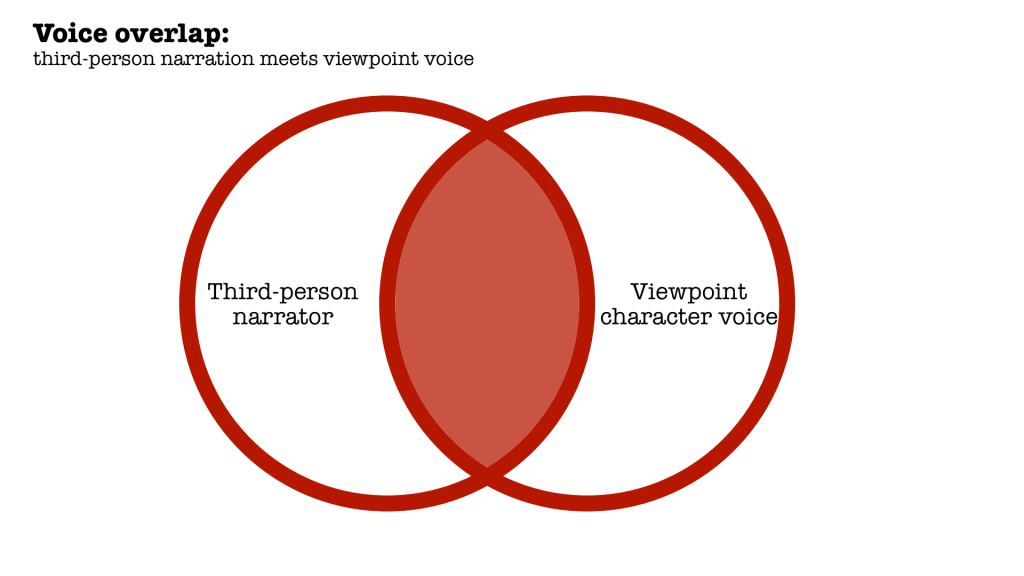
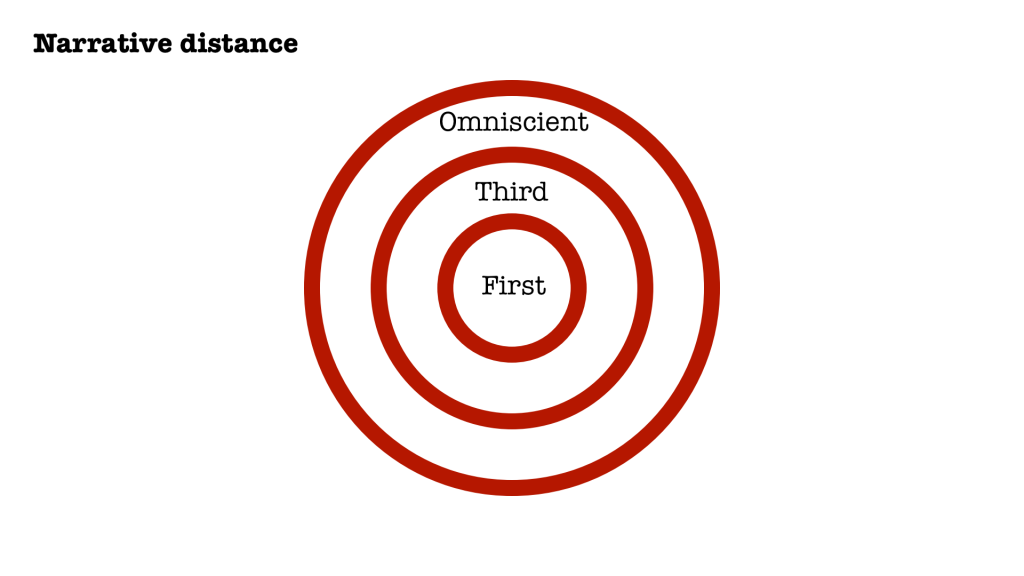
And how it relates to an ex-Pixar storyteller’s formula
Dear Storyteller,
It’s a rainy day in Copenhagen, a perfect day to cozy up with a fantasy story or fairy tale. So, why not do both?
To me, Frank R. Stockton’s 1887 story “The Bee-Man of Orn” feels like the evolutionary link between classic fairy tales and 20th century quest fantasy. The structure stays faithful to fairy tales, but the grouping of a sorcerer, an imp, and a dragon hints at the emerging fantasy genre.
As always, I encourage you to read the story and form your own opinions – and comment below about what writing craft techniques stood out to you.
When I first read Stockton’s story, I was reminded of the whimsical quality of Tolkien’s The Hobbit or the encounter with Tom Bombadil in Lord of the Rings (soon after which the fantasy genre mostly abandons the fairy-tale whimsy it grew up with). But what I want to look at today is how the story relies on fairy tale structure to guide us through the Bee-man’s quest – and how that structure can still serve us storytellers today.
The ordinary world and the inciting incident
The beginning of “The Bee-Man of Orn” quickly and concisely reveals that we are in a fantasy world.
The first line tells us this is a fairy tale. It could just as well have read, “Once upon a time, in the ancient country of Orm, there lived an old man.”
And the whole opening paragraph does several things:
Introduce the setting: “the ancient country of Orm,” obviously a fantasy setting
Introduce the protagonist: “there lived an old man who was called the Bee-man”
Introduce his ordinary world: “He was poor, and the bees seemed to be his only friends. But, for all that, he was happy and contented…”
Since this is both a fairy tale and a short story (and the short story owes a lot to fairy tales, not least in terms of brevity), the second paragraph already kicks the story into gear:
One day, there stopped at the hut of the Bee-man a Junior Sorcerer.
This Junior Sorcerer is about to disrupt the Bee-man’s ordinary world (or status quo). He acts as the story’s inciting incident (or catalyst), creating an imbalance that will force the main character into action.
In this case, it’s the Junior Sorcerer’s idea that the Bee-man has been transformed and ought to discover what his true form is. Inconveniently, the Junior Sorcerer can’t help the Bee-man discover his true form:
“If you know, kind sir,” he said, “that I have been transformed, you surely are able to tell me what it is that I was.”
“No,” said the Junior Sorcerer, “my studies have not proceeded far enough for that. When I become a senior I can tell you all about it. But, in the meantime, it will be well for you to try to discover for yourself your original form, and when you have done that, I will get some of the learned masters of my art to restore you to it. It will be easy enough to do that, but you could not expect them to take the time and trouble to find out what it was.”
This is the first hint that the story functions as a social critique. The Junior Sorcerer is such a recognizable type: the young learned man in a position of authority who’s eager to disrupt someone’s life, but incapable – simply not wise enough – to see the bigger picture. Or see things through, for that matter. He’s already on his way to his next “project.”
In a way, the story helps us all – including the sorcerer, who returns at the end – see that bigger picture.
But let’s look at the structure again.
The fairy tale plot formula that still works today
In Austin Kleon’s wonderful book Show Your Work! he references Emma Coats, a former storyboard artist at Pixar, who created a fill-in-the-blanks formula for storytelling. Amazingly, this is the basic fairy tale structure that Stockton used for “The Bee-Man of Orn.” Check it out:
“Once upon a time, there was _____. Every day, _____. One day, _____. Because of that, _____. Because of that, _____. Until finally, _____.”
“The Bee-Man of Orn” begins by hinting at the immortal opener “once upon a time.” Then it gives us an “every day” in that first paragraph. Note how language like “all day” and “always” indicate a timelessness. The second paragraph’s “one day” interrupts this timelessness, zeroing in on a specific moment.
This is crucial for our storytelling craft. If we stay too long in the timeless “every day, all day, always” mode, the reader will lose interest. The story needs to move forward.
So, after the Junior Sorcerer arrives “one day,” disrupting the Bee-man’s “every day,” it spurs the Bee-man into action. He asks the sorcerer for help, and when that doesn’t work, he decides to leave home to seek his true form. He prepares for his journey. He sets off.
What we see here is possibly the most important thing to master in storytelling: cause and effect. It’s what Emma Coats calls “because of that.”
When I look back at my early stories, they fell apart or felt lopsided because they failed to observe cause and effect in a believable way. Or else they had an exciting “once upon a time” and then “one day” sequence, but ran out of steam by the second “because of that.”
The bulk of a story consists of a chain of “because of that” links, forged together. It’s worthwhile for us storytellers to spend time thinking about the series of “because of that” incidents, and how they will build to a climax. If our “great story idea” only consists of the setup (“once upon a time” + “every day” + “one day”), we risk getting stuck in the middle.
But, you may wonder, how many links in the chain should there be?
The power of three
Fairy and folk tales began as oral storytelling. To help the storyteller remember stories – and, no doubt, to give the listener milestones along the way – a basic formula was devised: let there be three encounters or ordeals.
That’s not always the case, but the pattern does occur again and again in folk and fairy tales.
The wicked stepmother makes three attempts on Snow White’s life; Goldilocks tries out three chairs, three bowls of porridge, and three beds; and there are three goats who must cross the troll bridge in “Three Billy Goats Gruff.”
And so in “The Bee-Man of Orn,” the Bee-man visits three locations and has three primary encounters on his quest:
The Lord’s fair domain – where he is kicked by the Lord of the Domain
The Black Mountain – where he rescues the baby from the dragon
The village – where he returns the baby to its mother and realizes he once was a baby
Each encounter takes place in a new location and involves a different person. Note the contrasting encounters – we begin with an ungracious man in a park, transition into a deep cave in a mountain to face a dragon, and end with a grateful mother in a village.
Provide a counterpoint to the three
You’ve probably noticed that the Bee-man encounters another important individual on his journey: the Languid Youth. We even get a passage in which the Languid Youth argues with the Very Imp. This disrupts the straightforward pattern of three, creating a distinct contrast with the very orderly progression of the Bee-man’s quest.
The Languid Youth contrasts strongly with the Bee-man. This is where the story feels most like a morality tale, because the Languid Youth highlights the opposite of the Bee-man: he’s young (not old), he’s unenergetic (not action-oriented, like the Bee-man), and he prefers to watch a static monster – the Ghastly Griffin – as if he were in a museum (compared with the Bee-man, who engages with a very alive and active dragon).
So, here is a writing trick for structuring short stories: begin by laying out your series of three encounters, ensuring they are connected by a logical “because of that” cause and effect. Then consider how you can interrupt the sequence with another passage or encounter.
The pattern of three will still work well as a structural device, while the interlude will create variety that makes the story feel less rigid than a traditional fairy tale.
End at the beginning
The whole “point” to Stockton’s story is, of course, that we end up at the beginning, and there’s a lesson for us – and for the sorcerer – about staying connected to nature (the state we’re born into as babies). So, the structural device of the ending reflecting the beginning is particularly strong here.
But it’s a format you’ll see in many stories, including ones that don’t use it to deliver such a strong message, and it’s worth considering for your own stories – whether they’re short stories or novels.
Some examples:
In Charles Dickens’ A Christmas Carol, Scrooge revisits people he met at the beginning, and the contrast in his behavior toward them is big.
In Heart of Darkness by Joseph Conrad, we begin with Marlow telling his friends the story on a boat, and we return to that scene after the story about Kurtz in the Congo is done.
In Emily Brontë’s Wuthering Heights, we get Nellie Dean’s story nestled within Lockwood’s narrative, beginning with Lockwood’s first encounter with Heathcliff (when he’s alive) and ending with his visit to the graves of Catherine, Edgar, and Heathcliff (when he’s dead).
By taking the reader back to the beginning, the story offers a strong contrast to where it began, providing an opportunity to highlight how much change has happened. That could be a literal transformation in the story (the Bee-man seeks his true form, starts over as a baby, and becomes the Bee-man again) or a change in perspective in the reader’s mind (which evolves into the literary epiphany in the 20th century), or both.
A productivity method for writing lots of fiction and having fun doing it
According to his Wikipedia entry, Anthony Trollope wrote 47 novels, 42 short stories, and several non-fiction books – many of them popular in his lifetime.
Despite his prolific output, Trollope didn’t look back on a life of drudgery. Quite the opposite. “Few men, I think, ever lived a fuller life,” he says in his autobiography.
Today, we’re going to take a look at how Trollope wrote and what we – roughly 150 years later – can learn from him about getting work done. And still having time for other things.
Show no mercy – and get a groom to make coffee
Trollope attributes the fullness of his life to his disciplined work schedule:
“It was my practice to be at my table every morning at 5.30 A.M.; and it was also my practice to allow myself no mercy. An old groom, whose business it was to call me, and to whom I paid £5 a year extra for the duty, allowed himself no mercy. During all those years at Waltham Cross he was never once late with the coffee which it was his duty to bring me. I do not know that I ought not to feel that I owe more to him than to any one else for the success I have had.”
I love that he allowed himself no mercy, but then, just to be sure he didn’t slip up, he took the matter out of his own hands by hiring a groom to wake him and bring him coffee. This principle still works today, and I see some writing tips we can adopt.
1) Commit to your writing and hold yourself accountable.
Trollope’s idea is simple – set a specific time for writing and show up for the work. This is the essence of committing to the work and then doing it:
Schedule a time and add it to your calendar
Set your alarm to wake or notify you
Don’t allow yourself to hit snooze or dismiss the alert
Of course, this may require reorganizing your day. But if your writing is important to you, what are you willing to change in your day? Getting up early, like Trollope, requires going to bed early. Can you commit to being in bed by 9:30 or 10 pm? Why not? Note down what’s keeping you from committing to an early bedtime and early start. Maybe it’s TV. Maybe you like to read books in the evening. Whatever is on your list, consider how important the items are compared with your writing. If you really want to write a novel or stories, what are you willing to give up?
From Phineas Redux by Anthony Trollope.
2) Get someone else to hold you accountable, too.
Who can serve as your accountability partner? Notice that Trollope didn’t ask his wife, Rose, to hold him accountable. Instead, he paid a groom to do the task of waking him and making sure his butt got into that chair for his morning writing session.
A lot of the tasks that Trollope needed his groom for can be handled by electronics today, from alarm clocks to coffee machines. But only a human being can serve as a real accountability partner, reminding you of your commitment.
A fellow writer is a good option, someone who can send you a message during the day: “Hey, did you write this morning?” Alternatively, you can hire a writing coach to help you. Either way, it should be someone who, as Trollope says, “allows no mercy.”
3) Eliminate the tasks that stand in the way of your writing.
Don’t underestimate the importance of Trollope’s investment in coffee making. Every task that stands between you and your writing can be a distraction. Trollope knew this. Which was why he eliminated other morning tasks.
Once the groom woke him, all Trollope had to do was slip out of bed, pull on his slippers and robe, and then go sit down to his pen and paper – and coffee, of course.
Short of hiring an old groom to make you coffee, though, how can you automate the coffee making? If you have a coffee maker, many models have timers on them, so they automatically brew a cup of coffee for you at, say, 5:30 am. Or you can make a big batch of cold brew coffee, so you have enough for each morning of the week (the coffee does degrade, so better make a fresh batch every week or even every few days).
Let’s assume you’ve committed to your writing – and to showing yourself no mercy. Once you’re sitting at the desk with your pen and ink (aka laptop) in front of you, what do you then do? Do you start writing right away?
No, Trollope tells us. There’s something else you must do first.
Read yesterday’s writing
According to Trollope, a writing session doesn’t start with writing; it starts with reading:
“I always began my task by reading the work of the day before, an operation which would take me half an hour, and which consisted chiefly in weighing with my ear the sound of the words and phrases. I would strongly recommend this practice to all tyros in writing. That their work should be read after it has been written is a matter of course,—that it should be read twice at least before it goes to the printers, I take to be a matter of course. But by reading what he has last written, just before he recommences his task, the writer will catch the tone and spirit of what he is then saying, and will avoid the fault of seeming to be unlike himself.”
Tone of voice is obviously important, and your state of mind may be different from day to day, so Trollope’s advice is good: check yesterday’s writing, so you can slip into that voice, ensuring your draft is consistent.
Trollope doesn’t mention another important benefit. By checking yesterday’s writing, you can refresh some of the character, setting, and plot details, ensuring that those are consistent, too.
So, our next takeaway is:
4) Read yesterday’s writing to ensure consistency.
But don’t spend the whole time reading.
Trollope wrote in 3-hour sessions. If he devoted 30 minutes to reading the previous day’s work, then that left 150 minutes for new writing. Or, put another way, the half hour is about 16 percent of the session.
So, if you devote 2 hours to your writing, you need to carve out the first 20 minutes for reading yesterday’s work. Or if you have 1 hour, you devote about 10 minutes to reading yesterday’s work.
The trick is to leave plenty of time for new writing – and please don’t tinker with yesterday’s writing. It’s a surefire way to procrastinate and avoid today’s work.
Track your progress
Once you’ve read yesterday’s writing, it’s time to write. But for how long? And how much should you write? In answering these questions, Trollope has developed a very modern approach to productivity based on measuring progress.
He describes how he counts his words, tracking his progress as he goes:
“It had at this time become my custom,—and it still is my custom, though of late I have become a little lenient to myself,—to write with my watch before me, and to require from myself 250 words every quarter of an hour. I have found that the 250 words have been forthcoming as regularly as my watch went.”
Trollope’s approach reminds me of the Pomodoro technique, invented in the 1980s, according to which you work in intervals, with short breaks in between each session. The difference being that Trollope didn’t take breaks. In fact, his intention was to set goal posts and to track his progress.
And there’s no denying this methodical approach – combined with daily persistence – resulted in progress:
“This division of time allowed me to produce over ten pages of an ordinary novel volume a day, and if kept up through ten months, would have given as its results three novels of three volumes each in the year…”
In other words,10 pages a day of 250 words per page results in 2,500 words a day. Not bad.
So what lesson can we take away from this?
5) Set a timer and track your progress.
A timer going off every 15 minutes may sound annoying. It may even sound silly. Why bother keeping track of word count every 15 minutes? Well, it’s another way to hold yourself accountable. There’s no point to getting your writing done, if you’re spending the whole session daydreaming about other stuff.
(Daydreaming is important to writing, you may say. And I agree. But I recommend finding time elsewhere in your day to daydream about characters or plot – when you’re taking a shower or going for a walk or cooking dinner.)
If 15 minutes is too often, try setting a timer for every 30 minutes or even 60 minutes, depending on how much time you have to devote to your writing in every session. Or you can tally up your word count at the end of your session.
When the timer goes off, check your word count and make a note of it. Make sure that noting down the number is as easy as possible, whether it’s on a notepad on your desk or in a notes app on your computer. Then get back to writing immediately.
At the end of your session – or later that day – put the word count number(s) into a spreadsheet, so you keep track of your progress. Some writing apps, like Scrivener or Ulysses, track your progress for you. That’s fine. But when you’re starting out, I would recommend tracking your progress in a spreadsheet – you’ll pay more attention to it. Like Trollope did.
From The Way We Live Now by Anthony Trollope.
Anthony Trollope’s “method”
Here’s a summary of the points above:
Commit to your writing and hold yourself accountable.
Get someone else to hold you accountable, too.
Eliminate the tasks that stand in the way of your writing.
Read yesterday’s writing to ensure consistency.
Set a timer and track your progress.
Work hard and have fun
At this point, you may be convinced that Trollope paid attention to productivity. But didn’t he say something about living a “full life”? Yes, he did. Here’s what he says in his autobiography about his early morning writing routine:
“By beginning at that hour I could complete my literary work before I dressed for breakfast.”
Trollope had a goal and he stuck to it. By strictly committing to a daily production schedule and confining it to the early mornings, he could devote the rest of the day to other responsibilities or interests. I picture him moving through his day blissfully free from feeling guilty or distracted by his thoughts on writing. After all, he’d done it. And he knew that tomorrow he had time set aside to do it again.
If we don’t do any of the things he suggests above, we can at least try this three-part idea: commit to the work, find time to do it, and then do it. No excuses.
Part of the joy Trollope felt, I believe, was the joy of having accomplished what he set out to do – day after day. It’s a good feeling. I hope you’re feeling it too these days.
How Ambrose Bierce’s short story expertly handles third-person point of view
Ambrose Bierce’s short story “An Occurrence at Owl Creek Bridge” feels surprisingly fresh today, especially considering that it was originally published in 1890. It’s Bierce’s use of point of view (POV) that makes the story interesting well over a century later. So let’s take a look at how the narrative makes use of POV.
(Spoilers ahead, in case you haven’t read the story yet!)
If you read last week’s newsletter on the three points of view in classic fiction, you may recall that I reduced the long menu of options to three core POVs: first, second, and third person.
“An Occurrence at Owl Creek Bridge,” with its absence of an “I” narrator, is obviously third-person POV. But not a third-person narrator that stays close to the main character throughout. Let’s take a look at how viewpoint distance is handled.
The distant narrator sets the scene
Here’s the opening line:
A man stood upon a railroad bridge in northern Alabama, looking down into the swift water twenty feet below.
The narrator stands at a distance. The “man” doesn’t even have a name yet, let alone any thoughts. That will come later. For now, the narrator sets the scene, meticulously laying everything out for us from a birds-eye view.
Note how the narrator speaks about military matters:
A sentinel at each end of the bridge stood with his rifle in the position known as “support,” that is to say, vertical in front of the left shoulder, the hammer resting on the forearm thrown straight across the chest—a formal and unnatural position, enforcing an erect carriage of the body.
I see this as a way for the narrator to build trust with the reader. The details strike me as authentic. I’d even call them authoritative. They make me more likely to embrace the “willing suspension of disbelief,” as Samuel Taylor Coleridge called the “poetic faith” that makes us experience the story as real or true, even if we know it was made up.
Another sentence clearly communicates the narrator’s authority:
Death is a dignitary who when he comes announced is to be received with formal manifestations of respect, even by those most familiar with him. In the code of military etiquette silence and fixity are forms of deference.
This has an almost essayistic authority to it. But then take a look at the moment below where the narrator undermines its own authority:
It did not appear to be the duty of these two men…
And this:
Doubtless there was an outpost farther along.
“Did not appear”? “Doubtless”? The narrator has tremendous power to show us the world of the story, so why strike these notes of uncertainty?
Here’s why: These are ways for the narrator to set limits, subtly establishing boundaries. Otherwise, we might wonder, even subconsciously, why the narrator doesn’t tell us everything. In these two passages, the story is signaling that the narrator’s omniscience will be restricted.
That, in turn, sets up the move into the main character’s viewpoint about 800 words into the story:
The arrangement commended itself to his judgement as simple and effective.
Now, the narrator moves deep into the man’s point of view. And yet, by the last sentence of the first part, where the sergeant steps off the plank that holds the condemned man up, we still don’t know his name.
In fact, the first section gives us almost the full plot of the story. Everything that comes after is either backstory or a massive amplification of the seconds remaining in Peyton Farquhar’s life.
We can learn a lot simply by looking at the structure and how much time we spend on each section.
The shape of the story
Here’s the structure of the story:
The plot told mostly from outside Peyton Farquhar’s POV (1,057 words)
Backstory about Peyton Farquhar (482 words)
Peyton Farquhar’s vision in the split second before death (2,198 words)
I’ve already commented on section 1’s authoritativeness. But I’ll add this: I believe section 1, up until the moment we shift into Farquhar’s POV, takes an almost journalistic approach to establish a sense of objectivity.
That objectivity is then used in section 2 to give us the backstory about Farquhar, establishing how he, a Confederate, wound up being caught by Federal soldiers (FYI: Ambrose Bierce served in the Union Army during the American Civil War).
Note how short and matter-of-fact section 2 is. And how we end with a dramatic plot twist:
The lady had now brought the water, which the soldier drank. He thanked her ceremoniously, bowed to her husband and rode away. An hour later, after nightfall, he repassed the plantation, going northward in the direction from which he had come. He was a Federal scout.
Twist! This is worthy of a page turner, and that’s no accident. The narrative makes good use of adventure or military fiction tropes to keep us engaged. And those tropes are about to increase – to the breaking point – in section 3.
Objective reporting, adventure story, and mystical experience
The first time I read “An Occurrence at Owl Creek Bridge,” I didn’t guess that Farquhar died at the end of section 1. So, as the story evolved into a lucky and daring escape, with the rope snapping and Farquhar plummeting into the river, I began to adjust my expectations. Maybe this wasn’t the “objective” military reportage I’d sensed in section 1.
What splendid effort!—what magnificent, what superhuman strength! Ah, that was a fine endeavor! Bravo! The cord fell away…
But then that was tempered by what felt like a realistic depiction of Farquhar’s oxygen-deprived brain seeing the world differently:
He noted the prismatic colors in all the dewdrops upon a million blades of grass.
However, as Farquhar’s escape became more and more audacious, with bullets striking but not stopping him, I remember thinking, “All right, it’s pretty far-fetched, but I’ll enjoy this outdated adventure story for what it is.”
One lodged between his collar and neck; it was uncomfortably warm and he snatched it out.
Wait, what? He snatched it out? Then I realized that all this was adding up to something a little…strange:
Objects were represented by their colors only; circular horizontal streaks of color—that was all he saw.
And then a note of the mystical:
A strange roseate light shone through the spaces among their trunks and the wind made in their branches the music of Aeolian harps.
From here on, the narrative becomes more overtly dream-like, with the woods emitting strange voices in a foreign language, and his feet no longer touching – or, at least, feeling – the ground.
Then the narrative shifts into the present tense, a good way to create a feeling of timelessness:
Doubtless, despite his suffering, he had fallen asleep while walking, for now he sees another scene—perhaps he has merely recovered from a delirium. He stands at the gate of his own home. All is as he left it, and all bright and beautiful in the morning sunshine.
By this point, consider how far we’ve come from the authoritative, objective omniscience of the opening and the second section. And then, with an almost cruel swiftness, the narrative pulls out of Farquhar’s vision, zooming back out to the distant narrator’s perspective. Back to objective reality:
As he is about to clasp her he feels a stunning blow upon the back of the neck; a blinding white light blazes all about him with a sound like the shock of a cannon—then all is darkness and silence!
Peyton Farquhar was dead; his body, with a broken neck, swung gently from side to side beneath the timbers of the Owl Creek bridge.
The story ends abruptly, as abruptly as the sudden death. But it only feels abrupt because we’ve been given such deep access to the dying man’s final vision, and now the narrator has “zoomed out” again – all the way out to where we began.
The end is the beginning
Consider how this story would work if the narration limited itself to Farquhar’s POV, and we didn’t get the distant view of the scene at the beginning, nor the dispassionate backstory in section 2. The beginning would start with Farquhar reflecting on his situation and the way his execution has been set up. Unless we cut it entirely, we’d have to get the backstory within his POV. And the ending would need to be oblique, leaving us with something like “then all is darkness and silence!”
The power of the authoritative, distant third-person narration is that it allows us to have two levels in the story: 1) the matter-of-fact voice that gives us the believable material world; and 2) the deep-inside-Farquhar’s-mind POV that allows us to experience his fantasy escape and mystical vision right before he dies.
Plus, the distant narrator places bookends at either end of Farquhar’s story, which gives it a satisfying shape.
But you’ve listened enough to me. Now it’s your turn.
Learning from the story with a writing prompt
Here’s a writing prompt to help you use some of the POV techniques in “An Occurrence at Owl Creek Bridge.”
Try to replicate the story’s three-part structure but with a different situation. Consider the setting and situation you want to use, making sure that you have a clear conflict baked into the idea.
For example, you could tell a story about a woman who attends her high school reunion, expecting her relationship with her former classmates to have radically changed, only to discover that she quickly slips back into the queen bee role again.
So, using the three-part structure:
Section 1: Start your story with distant third-person narration that sets up your scene, describing it from the outside objectively while hinting that it will limit its range from going far beyond the main character’s experience. Dip into the main character’s POV.
High school reunion idea: Describe the reunion in objective detail, setting the scene for the “rules of engagement” at such events, then moving into your main character’s POV.
Section 2: Shift to backstory to explain how the main character landed in their difficulties.
High school reunion idea: Flash back to high school to show how she controlled and bullied the other kids around her. Or flash back to when the woman, who’s spent years working to be “a better version” of herself and never attended a reunion before, allows herself to be convinced things will be different now that 20 years have passed since graduation.
Section 3: Begin the final section by going deep into your main character’s POV and staying there until the twist at the end, when you pull back.
High school reunion idea: Does your main character trick herself into believing she’s the “good guy,” even as she subtly – and then not-so-subtly – undermines the other people around her, one micro-aggression at a time? See what works for your story.
If you don’t want – or don’t have time – to write a full short story, then spend some time drafting an outline based on the three-part structure, fleshing out how you’d like the story to progress.
After doing the writing exercise, feel free to post a comment on Substack about your experience. What kind of story did you work on? How did replicating the Owl Creek story structure influence the choices you made? Where do you want to take the story next?
I look forward to hearing how your writing experiment goes. And thanks again for reading.
A look at two core POVs with examples from intrusive and not-so-intrusive authors
When we write fiction, we must choose our story’s point of view (POV) from a menu of options, such as this:
First-person central (Jane Eyre by Charlotte Brontë)
First-person peripheral (The Great Gatsby by F. Scott Fitzgerald)
First-person unreliable (The Good Soldier by Ford Madox Ford)
Second person (“The Haunted Mind” by Nathaniel Hawthorne)
Third-person limited (The Portrait of a Lady by Henry James)
Third-person objective (“The Killers” by Ernest Hemingway)
Third-person multiple (The Wings of the Dove by Henry James)
Omniscient (Bleak House by Charles Dickens)
This can be dizzying. But really, all these options boil down to three core choices:
First-person narration: the author, like an actor, inhabits the role of a character – convincing us that there is no author-actor, only the character. That character may be focused on casting themselves as the hero of the story or they see someone else as the hero.
Second-person narration: the author addresses the reader directly, positioning the reader as the character experiencing the story.
Third-person narration: the author oversees the story, as if looking into a doll-house they built, and by describing the dolls’ actions and reading their minds, the author convinces us that the toys are alive in a real-world house. The author chooses how much to “intrude” on the narrative to make themselves known to the reader.
Fundamentally, fiction is this: an author tries to create a character experience on the page that readers can experience for themselves. POV is an important factor in how the author creates that experience.
So let’s look at POV. Second-person is rare, and I won’t delve into it today. But I’ll look at the two other basic modes of POV, starting with first person.
In which the author is an actor
In first person narratives, we usually get the direct retelling of the viewpoint character’s experience. Here’s an extract from Agnes Grey by Anne Brontë (which I’m reading right now), in which the viewpoint character is also the narrator:
Of six children, my sister Mary and myself were the only two that survived the perils of infancy and early childhood. I, being the younger by five or six years, was always regarded as the child, and the pet of the family: father, mother, and sister, all combined to spoil me—not by foolish indulgence, to render me fractious and ungovernable, but by ceaseless kindness, to make me too helpless and dependent—too unfit for buffeting with the cares and turmoils of life.
We’re “listening” to Agnes tell her story. Which means she can share her thoughts with us.
But, in reality, there is no Agnes. We’re listening to Anne Brontë pretend to be Agnes. She inhabits the role of Agnes, like an actor, and as when we attend a good play or watch a good film, we forget completely that Anne is playing a part. We believe Agnes and her direct experience.
First-person POV provides strict limitations for the writer: you’ve got to stick with that one character’s viewpoint. Within that limitation, however, you’ve got a lot of room for creativity.
Unlike Agnes above, the narrator in The Great Gatsby, Nick Carraway, focuses his attention on Gatsby, not himself. Meanwhile, the narrator in The Good Soldier by Ford Maddox Ford may not be reliable. So, as a writer of a first-person narrative, you’ll want to ask yourself:
Who is the narrator, and as the author, how am I going to inhabit this role?
Is the narrator also the central character in the story – or which other character is the narrator focused on?
How objective or reliable is the narrator – is there a gap between what happens and what the narrator reports to the reader?
Now let’s look at the third-person POV…
How the all-powerful author chooses to be visible or invisible
Here’s a passage from Edith Wharton’s The House of Mirth:
In the hansom she leaned back with a sigh. Why must a girl pay so dearly for her least escape from routine? Why could one never do a natural thing without having to screen it behind a structure of artifice? She had yielded to a passing impulse in going to Lawrence Selden’s rooms, and it was so seldom that she could allow herself the luxury of an impulse! This one, at any rate, was going to cost her rather more than she could afford.
Here we get another viewpoint character’s experience, but in the third person (she). As in Agnes Grey, we get access to the viewpoint character’s thoughts. But who are we “listening” to now? It’s not Lily, the viewpoint character. She’s sitting alone in a hansom (a horse-drawn carriage), so there’s no one else to witness this moment. And even if she had a companion nearby, that person wouldn’t be able to read her thoughts.
So who is the narrator?
The answer, I believe, is the most obvious one: the narrator is the author, Edith Wharton. But she makes herself so unobtrusive in this passage that we forget she’s there. Only a narrow distance stands between us and Lily’s experience. That distance remains present in the word choice, most notably “she” and “her.”
Just compare the passage above with my rewriting in first person:
In the hansom I leaned back with a sigh. Why must a girl pay so dearly for her least escape from routine? Why could I never do a natural thing without having to screen it behind a structure of artifice? I had yielded to a passing impulse in going to Lawrence Selden’s rooms, and it was so seldom that I could allow myself the luxury of an impulse! This one, at any rate, was going to cost me rather more than I could afford.
One way the author hides herself is by setting strict limitations on her reach in the story world. Technically, she could jump from Lily to the hansom cab driver, up over the rooftops of the city, and then back again. But it wouldn’t serve the story – plus it would increase the likelihood that we notice the jumping, and that would draw attention to the unseen storyteller.
Too much moving around is called “head hopping,” and it’s a common mistake in first drafts, where the third-person POV slips from one character to another and then back again. It can confuse the reader. It can also draw attention away from the viewpoint character’s experience, making us aware that the author is rummaging around in the doll house.
When an author limits her movements and that limitation is applied consistently, it’s often called “third-person limited.” The passage from The House of Mirth above is consistent. We might call it “third-person limited.”
But Edith Wharton isn’t consistent throughout her book.
Meet the author
Later in The House of Mirth, Edith Wharton speaks more directly to us:
Mr. Rosedale, it will be seen, was thus far not a factor to be feared.
The “it will be seen” isn’t something Lily thinks, nor is it a thought Mr. Rosedale has. In fact, it’s a reference to the unfolding of the story itself – something only the author would know. It’s what many would call “omniscient” narration.
Mostly, Edith Wharton avoids this kind of “authorial intrusion”; her style of writing heralds the 20th century love affair with the entirely invisible narrator. In other words, a strictly controlled “third-person limited” approach to storytelling. But as E.M. Forster says in his book Aspects of the Novel, “critics are more apt to object than readers” to the author being present.
In fact, some of the 19th century’s most popular authors made themselves very present on the page. Just take a look at the opening of Bleak House by Charles Dickens:
London. Michaelmas term lately over, and the Lord Chancellor sitting in Lincoln’s Inn Hall. Implacable November weather. As much mud in the streets as if the waters had but newly retired from the face of the earth, and it would not be wonderful to meet a Megalosaurus, forty feet long or so, waddling like an elephantine lizard up Holborn Hill.
If you haven’t read the full opening of this brilliant book, go take a look at it – it’s such a bold, confident example of “omniscience.” It’s very much Dickens, the author, moving around London, commenting on the state of things.
But despite this freedom, Dickens still limits himself. In the passage above, he swiftly moves from the big-picture view of London into the Court of Chancery and the case of Jarndyce v Jarndyce, which is central to the novel’s plot.
This passage from The Warden by Anthony Trolllope announces the presence of the storyteller even more overtly:
The Rev. Septimus Harding was, a few years since, a beneficed clergyman residing in the cathedral town of ––––; let us call it Barchester. Were we to name Wells or Salisbury, Exeter, Hereford, or Gloucester, it might be presumed that something personal was intended; and as this tale will refer mainly to the cathedral dignitaries of the town in question, we are anxious that no personality may be suspected. Let us presume that Barchester is a quiet town in the West of England, more remarkable for the beauty of its cathedral and the antiquity of its monuments than for any commercial prosperity; that the west end of Barchester is the cathedral close, and that the aristocracy of Barchester are the bishop, dean, and canons, with their respective wives and daughters.
He’s creating the story in front of us, anonymizing the cathedral town and then giving it a fictitious name. A modern author would avoid this. But that’s one of the many joys of reading Trollope: the author is conspicuously present – you’re not just getting the story (the character experience), you’re also spending time with the gregarious author.
Of course Trollope never walks into a scene in the story. He remains as much above or outside the story as Dickens did in the opening to Bleak House.
So, if you want to tell a story using the third-person POV, ask yourself:
How visible or invisible do I want to be?
If invisible, how am I going to keep myself hidden?
How much will I allow myself to “see” or “show” the reader – and how far away or close will I get?
Will I follow one character and limit myself to that person’s thoughts?
Or will I move from one character’s perspective to another – and if so, how will I avoid “head hopping”? Limit one POV per chapter? Or will I shift POV within chapters or even scenes?
Final thoughts
Point of view is a big topic. But try to keep in mind that with a first-person POV story, you are “acting” the part of a character, while with third-person you are telling the story and have to decide how visible or invisible you want to be. Most popular fiction today defaults to invisible authors. But after decades of omniscience being out of fashion, I see it returning gradually in literary fiction – and maybe someday authorial intrusion will become popular again.
Thanks for reading – and happy writing!
P.S. In the next post, I’ll take a look at POV in Ambrose Bierce’s “An Occurrence at Owl Creek Bridge.” If you want to follow along, feel free to download and read it.
Did your story or novel get rejected – by agents, editors, or buyers? Or maybe you wrote something you loved but that your friends, family, or fellow writers didn’t like.
You’re not alone. In fact, the history of literature is littered with stories about rejections.
H.G. Wells’s The War of the Worlds was rejected for being an “endless nightmare” (which now seems like a compliment), while Upton Sinclair’s The Jungle was deemed “fit only for the wastebasket.” Once they found a publisher, those books did just fine.
You may also like to know that Charlotte Brontë and her sisters – writing under male pseudonyms (Charlotte was Currer Bell) – struggled to find success. Of course, today the Brontë sisters are famous for their novels, in particular Charlotte’s Jane Eyre and Emily’s Wuthering Heights.
But success didn’t come easy. And when it came, it was because they persisted, refusing to give up.
Charlotte Brontë’s exemplary persistence
The three sisters – Charlotte, Anne, and Emily – weren’t just sisters. They were best friends, and they acted as a writing group, worldbuilding as kids and then later sharing their writings with each other.
They effectively served as workshop partners, providing feedback on each other’s manuscripts and then pursuing publication together. Maybe because they supported each other, they didn’t react to rejections by giving up. In fact, when their poems failed to take off, the lack of success only spurred them on:
“Ill-success [with the poems] failed to crush us: the mere effort to succeed had given a wonderful zest to existence; it must be pursued. We each set to work on a prose tale: Ellis Bell produced ‘Wuthering Heights,’ Acton Bell ‘Agnes Grey,’ and Currer Bell also wrote a narrative in one volume. These MSS. were perseveringly obtruded upon various publishers for the space of a year and a half; usually, their fate was an ignominious and abrupt dismissal.”
Charlotte, writing as Currer Bell, had submitted The Professor, alongside Emily’s Wuthering Heights and Anne’s Agnes Grey.
“At last ‘Wuthering Heights’ and ‘Agnes Grey’ were accepted on terms somewhat impoverishing to the two authors; Currer Bell’s book found acceptance nowhere, nor any acknowledgment of merit, so that something like the chill of despair began to invade her heart.”
This adds a layer of difficulty: comparing yourself to your peers. If you have a friend who’s a writer, or you’ve been part of a writing group, and others find an audience for their writing before you do, you might be able to relate to Charlotte’s disappointment. How hard it must’ve been to share Emily and Anne’s joy. I imagine the “chill of despair” was made a little colder by the fact that her sisters had success in finding a publisher.
But Charlotte didn’t give up. She tried one more publishing house. And got another rejection. But this time, the publisher offered constructive feedback and encouragement.
“[The publisher’s letter] discussed [the novel’s] merits and demerits so courteously, so considerately, in a spirit so rational, with a discrimination so enlightened, that this very refusal cheered the author better than a vulgarly expressed acceptance would have done. It was added, that a work in three volumes would meet with careful attention.”
I can picture Charlotte grasping this letter, her expression turning from disappointment to elation, as she realizes this is the big opportunity she’d hoped for. The publisher has recognized her talent – if only she can submit another novel.
Luckily, Charlotte, while waiting for responses from publishers on The Professor, had not been idle:
“I was then just completing ‘Jane Eyre,’ at which I had been working while the one-volume tale was plodding its weary round in London: in three weeks I sent it off; friendly and skilful hands took it in.”
We’re fortunate that Charlotte persisted, because Jane Eyre became a sensation, of course, and remains a much-read, much-beloved classic.
Learning from Charlotte’s travails
So what can we learn from this? I see three lessons we can take away from Charlotte Brontë’s story:
Get help. Join a supportive writing group to get constructive feedback and encouragement for publication.
Beware of comparing yourself to others. Instead, celebrate your writing friends’ successes, and keep seeking your own.
Keep writing. As soon as you submit a story or novel, immediately start another – that way, you haven’t put all your hope for success into one project.
Oft a little morning rain foretells a pleasant day
We can only wonder what the three sisters could’ve accomplished if they’d lived longer. Sadly, Emily died at age 30; Anne at age 29; and Charlotte, who lived longest, at 38.
They showed so much talent. But don’t forget that they also worked hard.
It’s remarkable that Emily Brontë’s Wuthering Heights and Anne Brontë’s Agnes Grey – their first submissions – were accepted for publication. Charlotte’s experience with The Professor and its many rejections seems more typical.
Here’s the thing, though: Charlotte clearly learned a lot from the rejection of The Professor, developing a much stronger story in Jane Eyre. Later, she even reworked her first novel, turning it into her last, Villette. (The Professor was published after her death)
So, this is a bonus lesson for us: Embrace rejections as being part of the writing life. Often, they can be transformative, helping us grow as writers and craft deeper, more powerful stories.
In other words, sometimes we need bad weather before we can enjoy the sunshine. Or as Charlotte wrote in her poem “Life”:
Oft a little morning rain Foretells a pleasant day. Sometimes there are clouds of gloom, But these are transient all; If the shower will make the roses bloom, O why lament its fall?
A mystery story that plays with mystery conventions
Dear Storyteller,
I hope you enjoyed reading Susan Glaspell’s “A Jury of Her Peers,” whether this was your first time experiencing the story or you revisited it for our deep dive. What follows contains major spoilers, so please make sure you’ve read the story first – it’s worth enjoying without any preconceived ideas.
You can find “A Jury of Her Peers” at Gutenberg.org here.
In what follows, I’ll share what I noticed in the story and highlight some writing craft tips – techniques you can try out in your own fiction.
I think any writer can learn from this story. Obviously writers of mystery fiction may want to study this closely, but non-mystery writers can also learn a great deal from this example of how mystery fiction techniques can be used to defy genre expectations.
What genre conventions? Well, for starters, a murder has been committed. So as a reader, I expect someone will investigate it. And I expect clues that will lead to a culprit. My expectations were formed by mystery writers like Arthur Conan Doyle (Sherlock Holmes) and Agatha Christie (Hercule Poirot and Miss Marple).
Susan Glaspell’s story delivers on mystery genre expectations, but also turns them upside down.
The first gentle undermining of expectations is that we don’t follow the sheriff and the county attorney as they go “off stage” to examine the crime scene and other locations for evidence, leaving the primary viewpoint character, Martha Hale, and the sheriff’s wife, Mrs. Peters, to investigate the kitchen for clues to what really happened to Minnie Foster (aka Mrs. Wright).
The biggest defiance of convention comes toward the end, though.
The first time I read the story, I was focused on finding out who murdered Mr. Wright (note the name – a nod to Right vs. Wrong…), and how justice would be served. Then comes a surprise toward the climax. The story challenges the conventional idea of law and order by spotlighting the “unofficial” crime – how the domestic abuser, John Wright, destroyed his wife’s life – and then giving the main character, Martha Hale, the agency to protect Mrs. Wright from an unjust system that would define her only as a killer, not a victim of a crime who was acting in self-defense.
The twisting of genre expectations is what makes this story technically unconventional for its time (it was also socially unconventional, because of how it addressed domestic abuse), and why it still feels fresh today.
What interested you the most as a reader? What techniques have you taken away as a writer?
Here are just three topics worth looking at in the text:
The names (Martha Hale, the County Attorney aka “Young Henderson,” Mr. Wright, why Martha insists on thinking of Mrs. Wright as Minnie Foster, yet Mrs. Peters gets no first name…)
The gaze (how Martha looks at things, how Mrs. Peters’ gaze communicates something within her, how the County Attorney gazes too…but differently)
The dialogue (how it characterizes and sets Martha apart from her antagonist, the County Attorney)
Let’s dive into how the story works. I’ll look at the structure, key techniques, and some craft lessons we can extract.
Off to a good start
Here’s what we first encounter when we start reading “A Jury of Her Peers”:
When Martha Hale opened the storm-door and got a cut of the north wind, she ran back for her big woolen scarf. As she hurriedly wound that round her head her eye made a scandalized sweep of her kitchen. It was no ordinary thing that called her away—it was probably farther from ordinary than anything that had ever happened in Dickson County. But what her eye took in was that her kitchen was in no shape for leaving: her bread all ready for mixing, half the flour sifted and half unsifted.
This is a solid beginning. We immediately get our main viewpoint character engaged in an action.
Not a big action, no. But she’s not passively observing the story world, either. This is especially important because she’s about to go through several scenes where she’s reluctant to take action, instead standing back and observing the situation, so the story needs to give us a taste of her active personality upfront.
I love “her eye made a scandalized sweep of her kitchen.” That single word “scandalized” tells us she has standards. It’s a characterizing moment, a small one, that will culminate in her radical action at the end. The lesson here is that we shouldn’t underestimate small characterizing details – they are the stepping stones to big, dramatic moments.
Her view of the kitchen might feel humdrum here at the beginning of the story, but as the mystery moves forward, we’ll see how Martha’s attention to details that matter to a farmer’s wife will ultimately lead to the big revelation – and an act of justice – at the end.
So this opening felt more meaningful to me the second time I read the story.
In reading fiction, I think it’s always interesting to pay attention to what your reaction is the first time and then, after reaching the end, return to re-read the beginning. Usually, if you connect with the story, the beginning will take on a new meaning. Sometimes the opposite meaning.
Now, let’s look at this line: “It was no ordinary thing that called her away—it was probably farther from ordinary than anything that had ever happened in Dickson County.” Which raises the obvious question, “What is calling her away?”
This is an oblique reference to the central question in the story: who committed the crime and how will justice be served? But notice that we don’t get the full question yet. In part because Martha isn’t thinking directly about it; but also, I’d argue, because Martha doesn’t know yet – part of the story is about her awakening to the right question.
Here are three takeaways – our first craft tips – from this short story beginning:
Introduce the viewpoint character quickly, ideally in the first sentence.
Give the viewpoint character an action that characterizes them.
Tell us – or hint at – what the story’s central question will be.
Are these “rules”? No. They are guidelines, invitations for us writers to try out to see if they sharpen our stories.
Now, let’s take a look at how “A Jury of Her Peers” is structured. But first…
A few words on structure
Structure can help us in two ways: when we’re planning a story or when we’re trying to understand one.
When we read other people’s fiction, we’re trying to understand how they’ve pieced together each moment to create a bigger experience. The more we look at how stories are structured, the more we build an analytical muscle. In other words, it gets easier and easier to see the shape of the story.
That’s a muscle we can then flex for our own fiction. Because when we revise a story or novella or novel, we are effectively approaching the draft as if we were a reader trying to understand it.
However, keep in mind that the way we see structure isn’t always the same. Go check out the many books on plotting out there – from Save the Cat! to A Hero’s Journey – and you’ll see how the same story can be deconstructed using different tools. Is one more correct than the other? Not necessarily. It’s more a matter of perspective than it is a matter of right and wrong.
I’ve found the many theories helpful, not as ultimate truths, but as tools I can experiment with, trying one out for a work in progress and then applying another to see what happens.
That’s a longwinded way to say that what I’m sharing here is my perspective. I hope it helps you form your own perspective – and inspire insights that I didn’t have.
So, having said all that, here’s how I’ve broken down “A Jury of Her Peers” into scenes.
Breaking down the story scene by scene
I’ve chosen to divide the story into 15 distinct scenes. Mostly, the scenes follow the conventional theatrical idea that a scene begins when the location changes or characters walk on or off (the short story was adapted from Glaspell’s one-act play Trifles).
These days, thanks to Hollywood-inspired storytelling, a scene is often defined in terms of conflict – a character wants something but faces an obstacle to getting what they want, and the scene ends when the character either succeeds or fails. I’ve kept that in mind, too, but when I was deconstructing “A Jury of Her Peers” I found it most helpful to think of it as a traditional stage play, not a modern movie.
The 15 sections below describe the scenes, the characters present (though they may not always be active), and questions raised, plus you’ll find my notes on notable dialogue, description, or objects — as well as craft tips I’ve gleaned from the story.
If you prefer to read the scene breakdown in PDF format, you can download it here:
Why is Martha being called away, when she “hated to see things half done”?
NOTES
The first sentence is an action – but it’s really a reaction. Martha is in a reactive state. Mrs Peters asked Martha to join; the wind makes her grab a scarf; her husband calls her away. See? All reactive.
As readers, we already have questions: Why is Martha being called away? But this passage gives us few answers. As it should be in the beginning of a story.
Note how objects already play a role: the woolen scarf, the flour in the kitchen. There’s a tangibility to things in this story that’s very nice – and that will prove significant for the plot.
SCENE 2
Approaching the Wrights’ farm
From: She again opened the storm-door…
CHARACTERS
Martha Hale
Mr Hale
Sheriff Peters
Mrs Peters
County Attorney
QUESTIONS
Who are the three men and one woman with Martha – and why must they go to the Wrights’ farm?
NOTES
We learn who the people are but not why they’re here – only that it’s something bad.
“And right there it came into Mrs. Hale’s mind, with a stab, that this man who was so pleasant and lively with all of them was going to the Wrights’ now as a sheriff.” Martha senses the danger. Already this early, the story establishes our detective hero (Martha), sidekick (Mrs Peters), and the antagonists (the three men).
“It had always been a lonesome-looking place. It was down in a hollow, and the poplar trees around it were lonesome-looking trees.” Note repetition of “lonesome-looking” – used sparingly, this is a good technique for emphasizing; it can have a haunting quality.
Notice how Martha observes her surroundings up until this moment; here, on the cusp of her crossing the threshold (literally and figuratively), she delves deep within herself to reflect on her personal stake in the story. This gives us a sense of her motivation.
Craft tip: When characters stand on the cusp of a difficult decision or risky undertaking, it’s a good time for deeper reflection.
SCENE 3
Establishing county attorney’s authority
From: The men went over to the stove.
CHARACTERS
Martha Hale
Mr Hale
Sheriff Peters
Mrs Peters
County Attorney
QUESTIONS
Who’s in charge? And (still open) why are they here?
This must be an official investigation – could it be a serious crime, like murder?
NOTES
There’s a subtle reference to the rocker, which will play a part later. Note how gradually the story establishes the setting. We writers can be tempted to dump all the information at once: “The kitchen was small and contained…” Resist the urge. Let the setting, like the story, unfold gradually.
Notice that the CA tells the women to “come up to the fire” (more a command than an invitation), and then how the sheriff takes charge, only to be undermined by the CA, who ends the short scene in charge. The sheriff bends to the CA’s will – but importantly, the women don’t.
It feels stronger that the story establishes the CA as the authority. Both Mr Hale and Sheriff Peters make comments that set up a strong patriarchal power imbalance. But even within the patriarchal power, there’s a hierarchy, and we learn that the CA is at the top.
Craft tip: In a story that deals with big oppositions in power, like men vs. women or poor vs. rich, try this out: individualize the power and establish a single character at the top of the hierarchy, and see how that works. Often it will save a story from becoming a kind of ideological essay with abstract parable-like forces rather than a drama with emotional impact.
SCENE 4
Mr Hale reports
From: “Well, Mr. Hale,” said the county attorney…
CHARACTERS
Martha Hale
Mr Hale
Sheriff Peters
Mrs Peters
County Attorney
QUESTIONS
Why are they here?
Will Mr Hale make things harder for Minnie Foster?
Did Minnie kill her husband?
Related: Will the CA prove that Minnie killed her husband?
NOTES
OK, so now we know: they are here to investigate Mr. Wright’s suspicious death. Which invariably introduces the traditional mystery questions: Who killed the victim and will the killer be brought to justice?
We don’t know yet if Minnie did it or not. Keep in mind that in a traditional mystery, the prime suspect usually turns out to be innocent. Also keep in mind that the traditional mystery has a conventional, even conservative view of what a crime is and who should be punished.
Sometimes a story is not just about the questions asked on the page but about the questions readers will bring to the story because of preconceived ideas.
Did you notice how the small chair was added to the rocker, expanding the key objects in the setting? And then there’s the reference to the rope (the off-stage murder weapon) and the apron. Of those two, which will turn out to be more important to the story? The apron. This defies traditional mystery conventions, in which the murder weapon is usually hugely important.
I love how Martha tries to influence the situation without speaking – through her gaze – and how she worries her husband will make things worse for Minnie. In the end, it does seem he has made things harder for Minnie by saying she looked “scared.” It’s a small victory for the CA. His victories will grow bigger as the story advances. In general, this is how we want to build drama – on average, increasing successes and failures from small to ever larger. On average? Yes, because sometimes you may want a larger success or failure followed by a smaller one, making the rhythm of your story more varied and the trajectory of the plot less predictable.
“…so he hadn’t been home when the sheriff stopped to say he wanted Mr. Hale to come over to the Wright place and tell the county attorney his story there, where he could point it all out.” Notice this smooth way of weaving backstory into the narrative; we’re being told about Harry, except we’re also getting backstory without it feeling like the author is shoving it down our throats. And right after this she worries about Harry out in the cold – a good way of making Martha sympathetic to the reader.
Craft tip: To build sympathy for a character, show the character caring, worrying, or loving another character – it makes them more human, relatable, and likable. You can take this one step further by making the character take an action that shows consideration for another person.
SCENE 5
Confrontation btw. Martha and county attorney
From: “I guess we’ll go upstairs first—then out to the barn and around there.”
CHARACTERS
Martha Hale
Mr Hale
Sheriff Peters
Mrs Peters
County Attorney
QUESTIONS
Did Minnie kill her husband?
Does the kitchen contain clues to the murder?
NOTES
Will the CA succeed in getting Marta to implicate Minnie in the murder? (Will the CA prove that Minnie killed her husband?)
More objects: the fruit jars, roller towel, and dirty pans under the sink. Notice the CA’s reaction to the smashed fruit jars: “‘Here’s a nice mess,’ he said resentfully.” An impartial man of authority wouldn’t express resentment. We’re often warned about adverbs, but here’s a case of an adverb doing good work – it hints that the CA is biased against Minnie.
Mrs Peters, who asked Martha to come in the first place, tries to draw Martha into the conflict here (“Oh—her fruit,” she said, looking to Mrs. Hale for sympathetic understanding.) When Martha doesn’t react, Mrs Peters turns to the CA, who ramps up his attack on Minnie (he doesn’t want to build sympathy for Minnie; he wants to prove her guilt and punish her).
Martha has been drawn into the conflict, but she continues to be reactive, or defensive. The active scene goal here lies with the CA: He wants to get Martha to implicate Minnie. Martha’s reactive goal is to defend and protect Minnie’s reputation.
Note how the CA says Martha is “loyal to her sex” – in other words, she’s taking Minnie Foster’s side, while he’s set himself against her. This is a clear establishment of the antagonism that will drive the story forward.
Craft tip: With a main character who is reluctant to act, add one or more secondary characters who pull the character into the action. This can be a more or less friendly stranger (like Mrs Peters in this story, Gandalf in JRR Tolkien’s The Hobbit, or the ghost in Shakespeare’s Hamlet) or it can be an antagonistic force (like the county attorney here, Count Dracula in Bram Stoker’s Dracula, or Captain Ahab in Melville’s Moby Dick). I’ve often revived a dead story by adding a character who actively draws my passive protagonist into a conflict she doesn’t want to be part of, giving my heroine no choice but to take action, even if it’s a reaction.
Also take a look at the exchange between the CA and Martha, how he lobs statements at her and then she questions or disagrees with them. It’s like a dialogue duel:
CA: “You didn’t like her?”
Martha: “I liked her well enough.”
CA: “I shouldn’t say she had the home-making instinct.”
Martha: “Well, I don’t know as Wright had, either.”
CA: “You mean they didn’t get on very well?”
Martha: “No; I don’t mean anything.”
Craft tip: Set up two characters against each other and make one state something that the other will disagree with, which then sparks a reaction (a question or another statement) from the first character, which again provokes disagreement from the second character. Notice how the same happens in dialogue between Martha and Mrs. Peters.
SCENE 6
Establish county attorney’s authority – again
From: He moved toward the stair door, followed by the two men.
CHARACTERS
Martha Hale
Mr Hale
Sheriff Peters
Mrs Peters
County Attorney
QUESTIONS
Does the CA trust the women? Does he see their role as important in the investigation?
NOTES
The CA says he trusts Mrs Peters, because of her role as the sheriff’s wife (she is “one of us”), but he leaves out Martha, suggesting he doesn’t trust her.
Note how he suggests that the women may find a crucial clue to the motive. This is important because a) it establishes that the CA doesn’t doubt Minnie killed her husband; b) it actually makes the CA more dangerous, because he’s not as quick to dismiss the women as the sheriff and Mr Hale are; c) it foreshadows what will, in fact, happen – Martha and Mrs Peters will unravel the mystery.
SCENE 7
The investigation begins: Why did Minnie leave her work unfinished?
From: The women stood motionless and silent, listening to the footsteps…
CHARACTERS
Martha Hale
Mrs Peters
QUESTIONS
What interrupted Minnie, so she left her work half-finished?
NOTES
My heart lifts when I read this section, when Martha slips into the role of sleuth. It delivers on a mystery trope that I enjoy as a reader – the detective who, through deduction, will try to discover the truth.
Now the importance of the objects comes to the fore.
Note how Martha’s question about Minnie harks back to our question at the beginning: Why would she leave her work half-finished? Because of the scene at the beginning, the story has established that the interruption of domestic work has significance.
Craft tip: If you want to develop a clue in your story, consider if there is a mirror image of that clue and place it earlier in the story to give it significance. That way when you get to the clue itself, its importance has already been established.
For example, you want to add a clue that the primary suspect was not the last person to use a knife in the kitchen. Early on, the protagonist notes that her husband, who’s left-handed, has been at her desk, because he’s left her favorite fountain pen on the left-hand side of her notepad, where she never leave it. Later, at the scene of the crime, she notes that a carving knife next to the chopping board is not only clean, it’s positioned to the left of the board, suggesting the person who last used it was left-handed – which the prime suspect isn’t. The sleuth deduces this because of her earlier realization about her husband using her fountain pen.
SCENE 8
The investigation continues: Where does Mrs Peters stand?
From: They were soon back…
CHARACTERS
Martha Hale
Mrs Peters
QUESTIONS
Does Mrs Peters care about Minnie’s side of the story?
NOTES
This scene establishes Martha and Mrs Peters as working together – as seeing eye to eye.
Notice how their observations about the objects match the traditional detective’s approach.
“…she said she wanted an apron. Funny thing to want…” There is uncertainty in how they “read” the objects at this stage, but as the story moves forward, both of them will become more confident in uncovering clues.
SCENE 9
The quilt revealed
From: Mrs. Peters went to the back of the room to hang up the fur tippet she was wearing.
CHARACTERS
Martha Hale
Mr Hale
Sheriff Peters
Mrs Peters
County Attorney
QUESTIONS
What’s significant about the quilt?
NOTES
This brief interruption of a scene reminds us that the CA is still working hard to find a solution, which means condemning and punishing Minnie Foster.
And a key clue occurs at the same time: the quilt.
This works well. Discovering the quilt is a breakthrough for the detectives, and so it’s a good time for the antagonist to return – to remind us of the threat looming over them.
SCENE 10
The investigation continues: What’s the significance of the quilt?
From: “I don’t see as there’s anything so strange,” Mrs. Hale said resentfully…
CHARACTERS
Martha Hale
Mrs Peters
QUESTIONS
What’s significant about the quilt? And what will Martha and Mrs Peters do with that knowledge?
NOTES
We learn that the quilt is evidence – and that Martha is willing to tamper with official evidence to help Minnie. This is step one in a series of three that builds to the climax.
SCENE 11
The investigation continues: What’s the significance of the bird cage?
From: But next moment she moved…
CHARACTERS
Martha Hale
Mrs Peters
QUESTIONS
Why is the bird cage important and what happened to the bird?
NOTES
This scene is the big reveal: The story has set up the idea that it’s focused on investigating the murder of Mr Wright, but this scene reveals the crime committed against Minnie Foster.
The bird cage and sewing basket are key clues, leading our sleuths deeper into the mystery.
Remember how I mentioned the way the CA and Martha engage in a dialogue duel? The same technique is used here to show how Martha and Mrs Peters are investigating what happened:
Mrs Peters: “Here’s a bird-cage. Did she have a bird, Mrs. Hale?”
Martha: “Why, I don’t know whether she did or not.”
Mrs Peters: “Seems kind of funny to think of a bird here. I wonder what happened to it.”
Martha: “I suppose maybe the cat got it.”
Mrs Peters: “No; she didn’t have a cat. She’s got that feeling some people have about cats—being afraid of them.”
Martha: “My sister Bessie was like that.”
Notice how the sequence of dialogue ends when Martha doesn’t offer a counterpoint – she agrees, but also diminishes the attempt to go deeper into the matter. In reaction to this, Mrs Peters looks closer at the bird cage.
SCENE 12
Establish county attorney’s authority – once more
From: “Well, ladies,” said the county attorney…
CHARACTERS
Martha Hale
Mr Hale
Sheriff Peters
Mrs Peters
County Attorney
QUESTIONS
Will the CA discover the bird cage and its significance?
NOTES
The CA notices the bird cage, raising tension, but Martha and Mrs Peters dodge a bullet – he doesn’t realize its importance.
It doesn’t seem accidental to me that the men return at this moment. Right when the women have discovered the clue that’s going to blow the case wide open. We can learn something here.
Craft tip: When your main characters come close to getting what they want, it’s a good time to push them back by bringing the forces of antagonism into the action again, obstructing the progress the characters have been making.
SCENE 13
The jury deliberates: Who’s going to punish this crime?
From: The two women sat motionless, not looking at each other…
CHARACTERS
Martha Hale
Mrs Peters
QUESTIONS
Who will deliver justice for Minnie Foster?
NOTES
The response to the key question in this scene, “That was a crime! That was a crime! Who’s going to punish that?” is delayed until the end, but we get a stepping stone toward that final resolution: Martha and Mrs Peters agree to cover up the truth about the broken jam jars.
Along with Martha redoing the quilt work, this is an example of Martha taking greater and greater steps to cover up the crime, so there can be justice for Minnie Foster. The final effort in this series of three is Martha hiding the dead bird.
Craft tip: The power of three pops up in stories again and again, from parables in the Bible to modern Hollywood screenplays. Don’t underestimate how deeply resonant a series of three can be for a reader. When you’re working on a story and want a climax to happen, consider what the climax is and brainstorm related actions. Find two that feel like they are smaller than the climactic action and string them together to create a progressive series of raised stakes.
SCENE 14
Strengthen county attorney’s authority – one last time
From: “No, Peters,” said the county attorney incisively…
CHARACTERS
Martha Hale
Mr Hale
Sheriff Peters
Mrs Peters
County Attorney
QUESTIONS
Will the CA discover what Martha and Mrs Peters have discovered (i.e. the truth about the murder)?
NOTES
Notice how dismissive the CA is in this scene, and how distracted he seems here at the end of the story. He’s a huge threat to the women, but he’s less assertive than earlier in the story. How would the scenes change if the CA aggressively questioned the women or returned to snooping diligently around the kitchen and its objects?
“’I want to go over everything. I’m not satisfied we can’t do better.’” This is an overt reminder that the antagonist – the CA – won’t stop until he succeeds or fails. The reminder is good timing, since we’re so close to the climax.
Notice how much more direct the story has become in telling us things (including via Martha’s dialogue). The closer we get to the climax, the more overt the story can become.
Craft tip: Reestablish or ramp up the stakes of the story just before the climax – and, at this point, don’t worry too much about being subtle.
SCENE 15
The jury hands down its verdict: justice
From: Martha Hale sprang up, her hands tight together…
CHARACTERS
Martha Hale
Sheriff Peters
Mrs Peters
County Attorney
QUESTIONS
Will the CA discover what Martha and Mrs Peters have discovered (i.e. the truth about the murder)?
NOTES
This scene is the climax of the story. Note how short it is. The climax itself can be narrowed down to a single sentence: “Martha Hale snatched the box from the sheriff’s wife, and got it in the pocket of her big coat just as the sheriff and the county attorney came back into the kitchen.”
Craft tip: Make the climax quick. Compression is your friend. Often a climactic scene will consist of a failed attempt to resolve the climax (here we witness Mrs Peters attempt to hide the bird, and fail). Then, maybe, we get one more attempt, but often we’ll go straight to the “climax proper” (as Charles Raymond Barrett calls it in his book Short Story Writing). In short fiction, the climax proper is ideally a single sentence. After this sentence, the story has reached its resolution, and now you want to swiftly wrap up. If you have a story where the ending is dragging or feels long and flat, try this: set yourself a strict word limit – 250 words for the scene and a single sentence for the action that marks the climax proper.
Final words
My hope is that the comments above – including the craft tips – are helpful.
There are more writing insights to gain from the story, of course. But don’t worry about picking apart the rest of the story. Instead, take another look at a scene in “A Jury of Her Peers” to see how a specific technique works, and then try it out yourself –write a short scene with a setting, characters, and situation of your own making that puts that technique to good use.
I recommend focusing on making that little scene work – don’t worry about whether it grows into something bigger. In fact, there’s value to thinking of it as exclusively an exercise. Sometimes it can take the pressure off the work and allow us to experiment more freely.
And that’s what this is all about: learning from classic stories so we can experiment and, hopefully, write even better fiction.
What technique would you like to try out? Did you do it? How did it turn out?
Next time
Next time, I’ll be looking at persistence – that essential, but difficult author skill – and what we can learn from Charlotte Brontë and others about how to keep writing, even when we face criticism and rejection.
Writers have always found inspiration in true events. There’s something especially intriguing about that opening credit to a film that says, “Based on a True Story.”
If you’re used to making up stories entirely from your imagination or basing your fiction on things that happened to you, I recommend trying to write a story based on events you’ve read about in the news.
That’s what we’ll be doing today. We’ll work with Hawthorne’s “An Ambitious Guest” and I’ll help out with a writing prompt below. But first some guidance from classic writers…
Defoe, Dickens, and Dumas
Classic literature is no stranger to turning fact into fiction — or even dressing fiction up as fact. Just look at one of the early examples of novels, Robinson Crusoe, which was launched with a wonderfully long title telegraphing its “trueness”:
The Life and Strange Surprizing Adventures of Robinson Crusoe, of York, Mariner: Who lived Eight and Twenty Years, all alone in an un-inhabited Island on the Coast of America, near the Mouth of the Great River of Oroonoque; Having been cast on Shore by Shipwreck, wherein all the Men perished but himself. With An Account how he was at last as strangely deliver’d by Pyrates. Written by Himself.
Now that’s a title! Here’s an overt example of how a book’s title was part art, part marketing (we’ll look at titles in a future newsletter). Note the claim that this is based on a true story: “Written by Himself.”
Daniel Defoe likely took inspiration from true stories of sailors marooned on remote islands. And he’s far from the only classic writer who’s looked to current or past events for material.
The Life and Strange Surprising Adventures of Robinson Crusoe.
Charles Dickens started his career in journalism, and his apprenticeship as a writer consisted of hours walking London’s streets every day and reporting on the people he met and the events he witnessed. You can read this early journalism in Sketches By Boz. You can also find it throughout his stories and novels, from The Pickwick Papers to The Mystery of Edwin Drood. The vividness of Dickens’ London – and his characters, in general – come from his keen observation of real life and his constant practice in finding ever better ways to describe what he saw.
The French writer Alexandre Dumas, famous for his adventure novels, like The Three Musketeers, came across a true tale of revenge in an 1838 book called Memoirs from the Archives of the Paris Police by Jacques Peuchet. Here’s a summary from Wikipedia:
Peuchet related the tale of a shoemaker, Pierre Picaud, living in Nîmes in 1807, who was engaged to marry a rich woman when three jealous friends falsely accused him of being a spy on behalf of England in a period of wars between France and England. Picaud was placed under a form of house arrest in the Fenestrelle Fort, where he served as a servant to a rich Italian cleric. When the cleric died, he left his fortune to Picaud, whom he had begun to treat as a son. Picaud then spent years plotting his revenge on the three men who were responsible for his misfortune. He stabbed the first with a dagger on which the words “Number One” were printed, and then he poisoned the second. The third man’s son he lured into crime and his daughter into prostitution, finally stabbing the man himself. This third man, named Loupian, had married Picaud’s fiancée while Picaud was under arrest.
The story inspired Dumas to craft his epic of revenge, The Count of Monte Cristo, in which the sailor, Edmond Dantès, who’s about to marry his fiancée, is falsely accused of treason and imprisoned on a prison island in the Mediterranean.
On the island, he befriends another prisoner, Abbé Faria, who helps Dantès solve the mystery of who accused him, including the man who wanted to marry his fiancée (and eventually did). During their imprisonment together, Faria acts as mentor and educates Dantès, then reveals the location of a treasure.
In many adventure stories, a mentor figure helps the hero by equipping him with knowledge and resources. Often, when that role has served its purpose, the mentor vanishes from the story. In fact, Faria dies.
Abbé Faria, the mentor figure, dies.
After this, Dantès escapes the prison island, retrieves the treasure, and remakes himself as the rich, enigmatic Count of Monte Cristo – and begins his subtle plot to take revenge on the three men who ruined his life. Interestingly, Dumas makes Dantès’ revenge less straightforward than Picaud’s, and more redemptive.
But I won’t spoil the plot. If you haven’t read The Count of Monte Cristo, do yourself a favor and get started – it’s still a fantastic page-turner.
(A warning, though: the earliest English translation has been heavily abridged and redacted – if you can get hold of Robin Buss’s more recent translation, I recommend it.)
Let’s look at a concrete example of a writer taking inspiration from a true story – our story for today.
The tragedy at Willey House
Nathaniel Hawthorne, the American writer most famous for The Scarlet Letter, likely heard or read a story about a tragedy in the White Mountains in Maine, which took place in 1826. In his book Short Story Writing,Charles Raymond Barrett mentions that Hawthorne must’ve heard of a landslide at a tavern called Willey House. He cites this report:
“Some time in June—before the great ‘slide’ in August, 1826—there came a great storm, and the old veteran, Abel Crawford, coming down the Notch, noticed the trees slipping down, standing upright, and, as he was passing Mr. Willey’s he called and informed him of the wonderful fact. Immediately, in a less exposed place, Mr. Willey prepared a shelter to which to flee in case of immediate danger; and in the night of August 28th, that year, he was, with his family, awakened by the thundering crash of the coming avalanche. Attempting to escape, that family, nine in number, rushed from the house and were overtaken and buried alive under a vast pile of rocks, earth, trees and water. By a remarkable circumstance the house remained uninjured, as the slide divided about four rods back of the house (against a high flat rock), and came down on either side with overwhelming power.”
You can see why a writer would be attracted to the story. You want to try to make sense of it. The awful tragedy. The unfairness of it. The sickening irony that their home remained standing.
To summarize what happens above: The father sees danger and prepares for the possibility of a landslide; the family escapes the house when the landslide comes; but they’re caught in the landslide, while their home – which they feared would be torn away – still stands.
If only they’d stayed in the house…
For a storyteller looking for stories, this one offers an entire plot. As the German writer and dramatic theorist Gustav Freytag says about a tragedy:
“This tragic force must possess the three following qualities: ( 1 ) it must be important and of serious consequence to the hero; (2) it must occur unexpectedly; (3) it must, to the mind of the spectator, stand in a visible chain of accessory representations, in rational connection with the earlier parts of the action.” – From Technique of the Drama
The tragedy in Maine fulfills all three criteria: (1) the consequence is deadly serious; (2) it occurs unexpectedly (certainly from the characters’ perspective); and (3) earlier parts of the action point to the tragic outcome.
Hawthorne must’ve been moved by the tale, but I also imagine that he saw how it offered him a fully formed plot. After visiting the area in 1830 and 1832, he turned the tragedy into a story in 1835 called “The Ambitious Guest,” which is included in his collection Twice-Told Tales.
If you don’t already have it handy, you can find it on Project Gutenberg here.
Before we get to the writing exercise, I encourage you to read the story – or at the very least the first couple of pages.
I’ll go make myself a cup of coffee while you read. I’ll be right back.
The Ambitious Guest
Now that you’ve finished reading the Hawthorne story, how faithful do you feel it is to the news report? The first time I compared the story with the news report, I was struck by how close Hawthorne stayed to the basic facts of the tragedy.
Having said that, the story doesn’t simply replicate the news report. Charles Raymond Barrett points out some differences between the original event and Hawthorne’s fictionalized account, including the composition of the family (the father, the mother, five children—the eldest a girl of thirteen—and two hired men, whose bodies were all recovered):
Location: no change
Timing: Hawthorne moves the action from August to September “to make plausible, perhaps, the rain necessary for such a slide, and to make seasonable the bitter wind which he introduces.”
Names: No names for any of the characters “to add to the air of unsolved mystery that haunts the story.”
Characters:
He added the guest and the grandmother
He made the daughter older (but kept the parents and younger children).
He left out the hired men.
Plot:
He left out the warning (from Abel Crawford) but kept the “place of refuge.”
He kept the family’s escape from the house and the house being left unscathed.
He left out the discovery of any bodies.
It’s striking how much Hawthorne kept from the original. But also how it clearly becomes a vessel for the story he wants to tell – a story that uses the tragedy of the true event to explore themes of ambition in the face of mortality, the omnipotence of nature, and the fragility of human lives (Hawthorne isn’t afraid of big themes!).
Next, let’s take a look at the story’s beginning to prepare for our writing exercise. I won’t delve into the full details of the story’s middle and ending, but it’s helpful if you know what happens in the rest of the story.
The first paragraph warns us
The story begins:
“One September night a family had gathered round their hearth and piled it high with the driftwood of mountain-streams, the dry cones of the pine, and the splintered ruins of great trees that had come crashing down the precipice.”
What an efficient opening line. Within a single sentence, the story establishes the setting – the time and place – and foreshadows the tragedy at the end by referencing the “great trees that had come crashing down the precipice.” Notice how, immediately after this, we get a description of the happy family. The contrast with the threatening nature is so stark that it adds to the sense of unease and impending disaster.
And in case the hint of danger in the opening line was too subtle for the reader, we get this:
“They dwelt in a cold spot and a dangerous one, for a mountain towered above their heads so steep that the stones would often rumble down its sides and startle them at midnight.”
The story’s antagonistic force
Notice how the narrative describes the stones tumbling down:
“The frank-hearted stranger had just drawn his chair to the fire when something like a heavy footstep was heard without, rushing down the steep side of the mountain as with long and rapid strides, and taking such a leap in passing the cottage as to strike the opposite precipice. The family held their breath, because they knew the sound, and their guest held his by instinct.”
I love how the narrative in this paragraph – and in the dialogue by the father that follows – characterizes nature as a living thing. Like an unpredictable spirit.
“‘The old mountain has thrown a stone at us for fear we should forget him,’ said the landlord, recovering himself. ‘He sometimes nods his head and threatens to come down, but we are old neighbors, and agree together pretty well, upon the whole. Besides, we have a sure place of refuge hard by if he should be coming in good earnest.’”
This also happens where the wind seems to “pause before their cottage, rattling the door with a sound of wailing and lamentation.”
Giving nature agency like this taps into a deep-seated, animistic instinct we probably all have that nature is somehow alive. Haven’t you ever had that feeling during a storm that it pushes malevolently against you? Has a tree branch ever taken a swipe at you, and you’ve instinctively felt it was “on purpose”?
This technique establishes nature as a character – the antagonist of the story.
And the story needs it. The introduction of a stranger – the young traveler – offers an incident that breaks the ordinary pattern of the family’s life. But do the characters oppose each other or create any direct complication? Not really.
Sure, there’s a gradual darkening of the mood (triggered by the wind), from the family’s initial happiness to a darker and darker reflection on death. But this only feels ominous because we sense the threat from the natural forces outside.
Without nature as an antagonist, we wouldn’t have much of a story – and definitely no tragedy at the end. But above all, if nature weren’t characterized as having a will of its own, the landslide would feel random, like a deus ex machina trick, simply there to help the author conveniently wrap up the plot.
This is a good tip for us when we want to end a story with a disaster: make sure the disaster behaves like a character in the story; it can help make the ending more plausible.
Nature often appears powerful and dangerous in classic literature – sometimes an impersonal obstacle, other times a character-like antagonist.
Watching with horror – and empathy
The power of the story is knowing – or sensing, if you don’t know the outcome – that these happy, hopeful people will face disaster. Given how much they talk about their dreams and plans, they’re bound to be disappointed. What we can learn from this as writers is that if you put characters in a scene and they talk at length about their hopes for the future, we readers will expect their hopes to be dashed. It’s effectively foreshadowing disaster.
Put another way, storytelling thrives on change; if you start a story with happy people, they’re likely to be unhappy by the end.
Knowing the tragedy to come, I found the story quite poignant. The narrative’s heavy-handed foreshadowing isn’t accidental – it’s a literary device to ensure that those of us who weren’t familiar with the original news story would know that these characters would come to a bad end.
The story wants us to watch with horror as the tragedy unfolds. But not just horror. Also with empathy.
I don’t think Hawthorne just left out their names to “add to the air of unsolved mystery that haunts the story,” as Charles Raymond Barrett suggests; I think he leaves out names to make these characters representative of humanity – for example, to make the “ambitious guest” an allegorical, everyman character. Their vagueness encourages us to project ourselves onto them, and that can make the story even more poignant.
Now I’d like to give you that exercise I’ve promised – a creative writing prompt to help you explore how to replicate what Hawthorne did at the beginning of his story.
Writing prompt
Pick a news story describing a disaster, and how it affected a small group of people (2 or more). The details must be concrete. Sadly, there should be no shortage of these stories out there. Alternatively, you can find a story about a miraculous rescue from what appeared to promise a certain death.
(If this is too triggering for you, and you prefer to skip this exercise – don’t worry, we’ll have lots more writing prompts in the future.)
If you’re stuck for ideas, here’s one for you that doesn’t end in death, which I’ve adapted and condensed for our purposes:
This event occurred in Denmark on Thursday, November 2nd, 1899, at Utterslev Farm outside Copenhagen. Two vagabonds – homeless wanderers – had been working the fields as hired hands, and had asked if they could sleep in the big barn. They were told no – once their work was done, they should move on. But after their work finished on Wednesday, the vagabonds stayed anyway, sleeping in the barn. On the morning of November 2nd, a fire broke out amid the hay-filled barn and a strong southeasterly wind spread the flames to neighboring buildings. The vagabonds got out, but they were arrested by the local police for starting the fire, and they were put in jail. Later, they were released when a servant boy at the farm admitted to lighting a pipe by the entrance to the barn and tossing his match aside, thereby starting the fire. But he too was acquitted after he retracted his confession and claimed the police officers coerced him.
Told from the perspective of the vagabonds, this story dramatizes the escape from one disaster, only to fall into another – injustice at the hands of the coercive police.
An illustration of a barn – for your inspiration.
So, the next step is to identify the key facts in the story:
The location
The time (season, month, time of day)
The characters
The details of the event
Now change the key facts. Change the location – or give it a fictional name – and strip the characters of names or change them (in my example above, the characters don’t have names).
What else would you change? What details of the event should change to make the story more dramatic or compelling? How are you going to use prose to characterize nature and create a feeling of impending doom? If you’re using the Utterslev Farm story above, how can you turn the wind into an antagonist that opposes the two main characters, the vagabonds?
Revisit “The Ambitious Guest” and look at the beginning, and how the story is set up. Now, using the details you’ve gathered, write your own opening paragraph, setting the scene, introducing key characters, and foreshadowing the tragedy to come.
A cautionary word on changing names
In the exercise above, changing details isn’t just an exercise in turning fact into more dramatic fiction. It’s also about keeping readers from recognizing the disaster you’re basing your story on. Recognizable names can be distracting, offensive, or even traumatizing. And it can result in legal action (if you’re interested, there’s plenty of information online about how to avoid libel and defamation, such as this).
Hawthorne kept his story so close to the source material that locals might recognize the event it was based on. His treatment of the tragedy was sympathetic, and so readers might forgive him for transforming the event into fiction. But Hawthorne also ran into trouble with this approach.
In his novel The House of the Seven Gables, he explores his family’s complicity in the Salem witch trials. It’s intended to be a fictional account of the family history, but after publication, a member of another colonial family, the Pynchons, accused Hawthorne of damaging their reputation via the character of Judge Pyncheon. Obviously adding an “e” to the name wasn’t enough…
So, handle the facts with care. Respect the source and your audience.
Next: a deep dive into “A Jury of Her Peers”
Next time, we’ll be diving into the short story “A Jury of Her Peers” by Susan Glaspell, which you can find on Project Gutenberg here.
This will be a longer analysis, in particular looking at its structure, so please take time to read the story. I look forward to your comments.
So, who was Susan Glaspell?
Susan Glaspell co-founded the Provincetown Players, one of America’s most famous theater companies, and she wrote lots of short stories, novels, and plays, winning the Pulitzer Prize for her 1930 play Alison’s House.
Glaspell adapted the short story “A Jury of Her Peers” from her play Trifles, which was inspired by a murder case she covered as a journalist. So this builds on our facts-to-fiction work with the Hawthorne story.
If you’re tempted to read more about Glaspell, be careful that you don’t accidentally come across a spoiler for the story we’re reading. You may want to wait to read her bio. Because if you don’t know the story, you’re going to want to enjoy the plot twists for the first time.
Looking forward to next time. Until then, happy writing!
Welcome to The Classic Storyteller, a blog post series that’s built on a simple premise: classic authors and their works have a lot to teach us about storytelling.
Why do this? Simply put:
“True ease in writing comes from art, not chance, as those move easiest who have learned to dance.” – Alexander Pope
I’ll be setting out on a journey to learn as much art of writing as I can from past masters, and I’d love for you to join me.
Together, we’ll look at stories, novellas, and novels by authors from the early 20th century and before to extract craft techniques and try them out ourselves – like point of view, worldbuilding, managing clues in mysteries, and more.
We’ll also hear from the authors themselves – from their letters or diaries or interviews – about their own views on writing, including the habits that helped them write the stories we love. In other words, evergreen productivity hacks.
My aim will be to feature insights from a wide selection of authors across genres, such as Jane Austen, L. Frank Baum, the Brontë sisters, Frances Hodgson Burnett, G.K. Chesterton, Kate Chopin, Agatha Christie, Arthur Conan Doyle, Joseph Conrad, Charles Dickens, Lord Dunsany, Elizabeth Gaskell, Victor Hugo, Henry James, Edgar Allan Poe, Anthony Trollope, Dorothy L. Sayers, Bram Stoker, H.G. Wells, Edith Wharton, P.G. Wodehouse, Emile Zola, and more.
Along the way, I’ll highlight key techniques to try out, offer writing prompts so we can actively practice our authorial skills, and – as a positive side effect – introduce you to classic works of fiction or nonfiction you might’ve missed along the way. Or put a fresh spin on an old classic.
And throughout, I’ll keep both feet firmly planted on the ground. Promise! No brilliant academic treatise on the Great Books. Instead, the conversation will be focused on tangible, easy-to-grasp writing concepts. So if you’re looking for accessible advice on telling a good story, I hope you’ll find the newsletter useful.
All right, so let’s answer some questions…
Why do a creative writing newsletter on classic literature?
I’m launching this project for a dozen reasons that can be boiled down to three key points:
Classic works of literature have taught me so much about writing already – I know a deeper dive into the classics will only make my writing life richer. I hope you feel the same.
As a writer and writing coach, I feel a call to share my ideas with others, in the hopes that you will benefit from them.
Classic literature can teach us a lot about making stories that entertain as much as they enlighten.
That last point deserves a bit of unpacking. What I mean is this: Pre-Modernist writers, like Austen and Conrad and Dickens, wrote within their time’s most popular artform, creating stories that appeal as much to the heart as to the mind.
In other words, they’re fun.
Once we get used to diction that’s different from ours, classic stories are still accessible today.
They’re also “accessible” in another way – they’re easy to get hold of. The books and stories I’ll be looking at are in the public domain and so accessible to everyone with an internet connection, regardless of income or location. You can find many of them on the wonderful Project Gutenberg site.
How often will I see new posts?
Initially, I expect to post 1-2 times per week. If I run a special series on a longer work, I may change the cadence to better suit our purposes, but I’ll let you know.
Who are you?
I’m glad you asked! Here’s the short version:
My name is Mathias Black, and I’m an indie author and writing coach. For years, I worked in marketing and communications (incl. at Ford Foundation), and I still do some consulting in that field. On top of book coaching and communications consulting, I write and publish commercial fiction – 14 light-hearted mysteries so far, all under the name M.P. Black.
For nearly a decade, home was New York City. After taking courses at The Writers Studio and Gotham Writers Workshop, and then studying under a wonderful writing mentor (Martin Roper), I completed an MFA in Creative Writing at Brooklyn College. Now, I live in cozy Copenhagen, Denmark, with my family.
A postcard showing Kongens Nytorv, Copenhagen, in 1847.
What do I need to do?
To get the most out of this series, I encourage you to read the stories we’ll be looking at and then complete the exercises and writing prompts. I’ll be giving a variety of prompts to stimulate your imagination but also to test out specific techniques, so you can learn bite-sized skills that will come in handy when you’re knee-deep in a story or novel.
What’s next?
For our first dive into classic storytelling, we’ll look at how Nathaniel Hawthorne turned a tragic event into fiction in his story “The Ambitious Guest.” Following a brief analysis, we’ll do a writing exercise based on what we can learn from Hawthorne.
You can find “The Ambitious Guest” in Nathaniel Hawthorne’s story collection Twice-told Taleshere. I encourage you to read it.
Enjoy your reading, happy writing, and see you next time!
When you read like a writer, you pay close attention to the techniques an author uses in a narrative and the effects they have on the reader.
Since you’re a reader yourself, you’ll have to observe your own emotions as you read. This takes practice. Which is why you’ll often hear experienced writers encourage you to read, read, read. How else are you going to observe the way certain techniques spark emotion in the reader?
In fact, we writers have to cultivate two sides to our personalities: we’re Dr. Jekyll and Mr. Hyde at the same time. Imagine Mr. Hyde, all emotions, reading the story first, and then the doctor dissecting it with clinical detachment. Finally, we synthesize the information by bringing the two together in dialogue.
Dr. Jekyll: How did this make you feel?
Mr. Hyde: Sad. I felt so invested in the character that the bad news she experienced hit me hard.
Dr. Jekyll: Interesting. Let’s take a look at what made you so invested in the character in this passage. Could it be the closeness to the viewpoint character? Or maybe the dialogue?
What writers know is that, ultimately, we learn to write by practice, hard work, by repeated trial and error, success and failure, and from the books we admire.
– Francine Prose, Reading Like a Writer
What to ask when you read like a writer
The practice of reading like a writer – bringing your own Jekyll and Hyde into conversation – will become more and more automatic as you become more used to it. But when you’re starting out, I recommend taking notes, jotting down the key facts about the story.
If you’re studying a short story or novella, can you print it out and mark it up (or save the paper and mark up a PDF on your laptop or tablet). Keep the marked-up manuscript for future reference – you may want to return to it later for inspiration.
Let’s take a look at some questions you can ask about the story. You can also download the full list of questions in PDF format for easy reference – just click the button below.
Grab your FREE workbook
When you read like a writer, you pay close attention to the techniques an author uses in a narrative and the effects they have on the reader. This short PDF workbook provides a list of questions you can ask when you analyze someone else’s work of fiction.
Every story – whether a short story or an epic trilogy – can be summarized in terms of plot, characters, and setting. If you don’t know where to begin, begin here.
What happens in the story? Describe the plot in 2-3 sentences.
Who are the characters? How many are there?
What’s the setting – the time and place of the story? How often does the setting change? You’ll also want to note if this is a fantastical setting or a real, historical or contemporary one.
What’s the overall structure of the plot – e.g. what events would you identify as the inciting incident, the midpoint, and the climax?
Roughly how long are the scenes or chapters and how much dialogue vs. description do you see on the page (i.e. how much blank space do you see vs. dense text)? This may tell you something about pacing.
Don’t worry about crafting an exhaustive overview. If you’re reviewing an 800-page novel with a cast of dozens, keep your summary as simple as if it were a 180-page novel. This is a broad-strokes summary.
Read like mad. But try to do it analytically – which can be hard, because the better and more compelling a novel is, the less conscious you will be of its devices. It’s worth trying to figure those devices out, however: they might come in useful in your own work.
– Sarah Waters, Ten Rules for Writing Fiction (in The Guardian)
Now, let’s give some thought to the overall impact of the story.
After finishing the story, close your eyes and picture the story. What image appears in your mind? Why do you think this is the strongest image the story left in your mind?
Go ahead and do it now. If you haven’t just finished a story, then consider the last memorable story you read. Close your eyes. What do you think of when you think of the events of the story?
Also, how did it make you feel? Usually, the more powerful an emotional reaction, the more memorable the story will be (as long as the emotion was intended, of course – feeling profound boredom during an action/adventure story is no good).
What emotional peaks can you identify during the story? Mark where you feel the most and note what you feel. How do you feel at the end? Look back at the emotional peaks – what does their placement tell you about the structure of the story?
We also want to consider the kind of story this is and whether it meets reader expectations.
What is the genre of this work and how does the story fulfill or defy genre expectations?
The beginning
Now, let’s dive into the story in more detail, starting with the beginning:
What is the story’s hook? What grabbed you on page 1?
Where does the story begin in the lives of the characters? Why not earlier? Why not later? What’s special about this moment?
What’s the inciting incident – the event that disrupts the main character’s ordinary life – and when does it occur in the story?
Hold the reader’s attention. (This is likely to work better if you can hold your own.)
– Margaret Atwood, 10 Ideas for Writers
The inciting incident will set up a question for the reader, and it’s always worthwhile looking at how reader questions are handled throughout the story – are they answered or complicated or left unresolved? If you’re having trouble nailing down what the question is, take a look at the problem the main character faces, since that’s usually tied up with the overall story question.
What are the questions you have at the beginning of the story – questions that motivate you to read on? Do you still have those questions in the middle of the story? If they’ve changed, did you get answers or did the questions transform? And what questions or answers do you have at the very end of the story?
What is the main character’s biggest problem early in the story? How does the story express the problem? And what happens to the problem by the end of the story?
Characters and viewpoint
And that leads us logically to considering the central characters in the story:
Why is the main character the focus of the story – why not one of the other characters?
What motivates the main character (and the other characters)? How does this motivation move the story forward?
How do the central characters change from the early scenes to the end of the book?
The way the characters are presented – and how you see their world through their eyes – has a big impact on the entire reading experience. So let’s look at the point of view.
What’s the point of view? How many viewpoint characters are there? Why do you think the story gives us access to this character or these characters, and not others?
How does point of view limit what you know as a reader?
The point of view is closely tied to the narrative voice and the mood set by the narrator’s descriptions.
How does the narrative style set a certain mood and which words or phrases can you identify that contribute to the mood?
Setting: time and place
The settings the characters move around, and how they’re described, contribute to the overall mood and trajectory of the story, too.
What makes the setting stand out? Do these features make it appealing or unappealing to the reader?
How does the setting reflect or support the conflict among the characters?
Setting isn’t just about physical space or geography, it’s also about time. So let’s ask ourselves questions about how the story handles time.
How much of a time span do “see” in the story and how much is implied or referred to that happens before (or even after) the events on the page?
How does the story handle its on-page events? Are they told chronologically or out of sequence? Why do you think the story events are told in this order? How could the story be told in a different order?
The ending
How and where the action ends can tell you a lot about the entire story, especially if you look back at the beginning.
Why does the story end when and where it does? Could you imagine it ending in a different way?
How do the ending pair or contrast with the opening to frame the story? Does the pairing or contrast suggest something about the change that’s happened or the theme of the story?
Finally, there’s a crucial question you’ll want to ask yourself as you wrap up.
The last question you should ask yourself
Look back at everything you’ve investigated so far and then pick out the techniques you discovered in the story that you’d like to experiment with yourself.
Ask yourself:
What writing techniques stood out – and which would you like to try out in a story of your own?
This is the big payoff question. By asking all the preceding questions, you should be able to pick out at least one narrative technique that looks interesting.
Even if you don’t like the story.
I’ve learned great techniques from stories I disliked as a reader – simply by asking, “How can I use this technique in my kind of story?”
Grab your FREE workbook
When you read like a writer, you pay close attention to the techniques an author uses in a narrative and the effects they have on the reader. This short PDF workbook provides a list of questions you can ask when you analyze someone else’s work of fiction.
Point of view (POV) can make or break your story. Finding the right POV requires knowledge of the different kinds of POV and how they work. And then, when you’ve picked a POV, you need to work hard to keep it consistent.
But once you learn the basics, all it takes is practice.
Keep reading to learn what point of view is, which varieties exist, and how to manage them.
What is point of view (POV)?
Point of view (POV) refers to the perspective from which a story is told – who is narrating the story and how much information the reader gets access to.
It’s important to distinguish between the narrator and the viewpoint character. The narrator is the person telling us the story. The viewpoint character is the person experiencing the story.
Imagine that the narrator is a ghost, a disembodied spirit who can move around the world, hovering above it or diving close. The ghost has an incredible ability to slide into a person’s mind and experience the world as that person experiences it. That’s the power of the narrator.
But the ghost’s powers are usually limited. Let’s look at how a narrator’s powers are most often limited by point of view.
Omniscient narrator
An omniscient (“all knowing”) narrator – a god-like ghost – has the most freedom. It can fly high above the action and then zoom down into the mind of a character. After a while, it can jump out of that character and enter another character’s mind. It can also comment on the bigger picture, with insights into characters that would be impossible for, say, a journalist to know.
If you’ve read Charles Dickens or Leo Tolstoy – and other 19th century novelists – you may recognize this technique. But it also appears in more recent books, like Ann Patchett’s Bel Canto.
“Everything was in confusion in the Oblonskys’ house. The wife had discovered that the husband was carrying on an intrigue with a French girl, who had been a governess in their family, and she had announced to her husband that she could not go on living in the same house with him. This position of affairs had now lasted three days, and not only the husband and wife themselves, but all the members of their family and household, were painfully conscious of it. Every person in the house felt that there was no sense in their living together, and that the stray people brought together by chance in any inn had more in common with one another than they, the members of the family and household of the Oblonskys.”
The key effects of omniscient narration – and the risks:
Provide a big picture view: The narrator has the freedom to provide a big picture view of a story that involves many characters across many locations – and even across a long time period. This is useful if you’re telling a story about a community that spans a long time. The risk with this freedom is that you may lose focus. With so many places to go, so much to see, what should you focus on? The reader may get lost and lose the connection with the essence of the story.
Comment on the story: The narrator can assume a “storyteller” voice, commenting on the action and offering information that none of the characters would know. We all know the storyteller from fairy tales: “Once upon a time…”The risk of omniscient commentary is that the narrator becomes so “intrusive” that the reader feels the author is interrupting the story to comment. Too much of this interruption feels like being “talked at” by the author, alienating the reader from the story itself.
Contrast characters’ experiences: The narrator can show how several characters in a single scene view the situation, slipping in and out of their viewpoints and commenting on the action. The risk is “head hopping” – when the narrator makes abrupt leaps from one viewpoint to another, confusing or alienating the reader.
Third-person limited
With third-person limited, the narrator is not a character in the story. You’ll recognize this as the classic “she walks down the street” story.
Although “she walks down the street” sounds like the narrator sees the character at a distance, the limitation is this: the narrator refers to the character from the outside but focuses exclusively on that character’s thoughts, feelings, and perceptions. Usually, the narrator doesn’t reveal information about the character that the character herself wouldn’t know.
This hybrid approach also creates a fusion of voices. The closer the narrator gets to the character, the more the narrator’s voice sounds like the character’s own voice. It’s as if we get a hybrid of the third-person narrator and a first-person voice.
But this doesn’t mean that the writer must stick with just one character for an entire novel. Usually, readers expect a scene to be told from one viewpoint character’s perspective. But in the next scene, the narrator may shift to another viewpoint character, fusing with that person’s voice.
If the narrator makes this shift from one character to another, it usually happens with a clear break in the narrative – such as after a scene break or when a new chapter begins. Sometimes that’s called a “multiple point of view” narrative.
“When Helen woke again, Hugh and Manus were sound asleep. It was just after eight o’clock; the room was hot. She slipped out of the bed and, carrying her dressing-gown and slippers, she went downstairs, where she found Cathal, still in his pyjamas, watching television, the zapper in his hand.”
The key effects of third-person limited – and the risks:
Readers can relate to the viewpoint character: The closeness to the viewpoint character establishes a bond between the reader and the character, potentially increasing the reader’s involvement. But you can’t show the contrasting thoughts of other characters in a scene (otherwise it’s omniscience), so that means you have to maintain strict control of the narrative viewpoint.
The novel’s tone can exist on two levels: With the viewpoint character’s voice coloring the narrative, you can play with two voices. For example, the narrator can use language that suggests a dark, brooding story, even as the viewpoint character’s own voice is light and carefree. This contrast can make the reader worry. Obviously, the dark, brooding world is a threat; will the viewpoint character realize it before danger strikes? Another example: In a story about depression, you can begin with a “neutral” narrative voice; then, as the story progresses and the viewpoint character becomes more and more depressed, the narrative voice can take on more and more of that brooding quality. The risk here is that the writer needs to manage two distinct voices and, in this last example, even create a seamless evolution of that voice to dramatize the character’s worsening depression.
First-person
The first-person narrator is the most limited of them all. Here, the narrator merges with the viewpoint character. The “ghost” cannot escape the character’s interior. What the character sees, the narrator describes: “I walked down the street…”
This approach limits the reader’s knowledge of the story world to the viewpoint character’s thoughts, feelings, and perceptions.
“Branshaw Manor lies in a little hollow with lawns across it and pine-woods on the fringe of the dip. The immense wind, coming from across the forest, roared overhead. But the view from the window was perfectly quiet and grey. Not a thing stirred, except a couple of rabbits on the extreme edge of the lawn. It was Leonora’s own little study that we were in and we were waiting for the tea to be brought. I, as I said, was sitting in the deep chair, Leonora was standing in the window twirling the wooden acorn at the end of the window-blind cord desultorily round and round. She looked across the lawn and said, as far as I can remember: ‘Edward has been dead only ten days and yet there are rabbits on the lawn.’”
The key effects of first-person narration – and the risks:
Create a powerful intimacy: No other narrative form can create such a sense of intimacy between the viewpoint character and the reader. As a reader, you feel you’re living the story vicariously through the narrator. The lack of narrative distance makes the story feel immediate. The downside is that you are so close to the character that the experience can feel small, limiting, even claustrophobic. This works well for a novel that’s exploring a character’s state of mind, but it’s hard to pull off for a giant, sweeping saga covering many locations, many characters, and an extended time period.
Emphasize the power of voice: Some of the most compelling first-person stories grab us because the character’s unique voice hooks us. Mark Twain’s Huckleberry Finn, Per Petterson’s Trond Sander in Out Stealing Horses, and Alice Walker’s Celie in The Color Purple – these viewpoint characters all speak with distinctive voices. The risk is that your story offers lots of voice but no substance: nothing happens. Or that the voice is dull or inconsistent, alienating the reader from the story.
Establish reliability or unreliability: A confident first-person narrator can be a joy to read. But sometimes that narrator can’t be trusted. When the story kicks off, we may believe we’re being told the truth, only to discover that things don’t add up. Gradually, we suspect the narrator isn’t telling the entire truth – either lying to us or lying to themselves about the reality of their situation. This is called an unreliable narrator. A beautiful example is the butler, Stevens, in The Remains of the Day by Kazuo Ishiguro. But this technique can be difficult to pull off, and there’s a risk that the reader feels manipulated.
I’ve heard people say that first-person narratives are “simplistic” or “too limiting” – even that “serious writers” aspire to stick to the third-person. That’s silly. The first-person narrator can cover a lot of ground, not least creating an intimate engagement with the reader.
But if you want to experiment with narrative form, the first person also offers a variety of approaches:
Stream of consciousness
Confession or remembrance (e.g. a mature narrator looking back on something that happened when he was younger and less experienced)
Letters (e.g. an epistolary novel, like the letters and diary entries in Dracula)
Nested stories (e.g. where a first-person narrator tells a story, also told by a first-person narrator, creating an additional layer – see A Heart of Darkness by Joseph Conrad or The Turn of the Screw by Henry James)
You can also choose to tell a first-person story in a plural voice: we/us. This is unusual, so you don’t see it often – and especially not in genre fiction. But it can be a compelling way to tell a story about a collective experience.
Joshua Ferris uses the first-person plural in his advertising agency satire, Then We Came to the End. But you can also mix the first-person singular with the plural, as Carsten Jensen does in his novel, We, the Drowned – giving a voice to the seafaring community he chronicles, while also allowing the narrative to dive into first-person singular voices.
Second-person
The first-person plural isn’t the only unorthodox approach to narrative. In a second-person story, the narrator addresses the reader directly as the viewpoint character. You’re the protagonist.
This works well for choose-your-adventure books, but for fiction it’s rarely used. Jay McInerney used it in his 1984 novel, Bright Lights, Big City, but I’ve mostly seen it used in short stories, where the technique is short-lived. For example, Lorrie Moore has a story called “How to Become a Writer,” which lampoons self-help books – a fitting use of the second-person narrator.
“Decide that you like college life. In your dorm you meet many nice people. Some are smarter than you. And some, you notice, are dumber than you. You will continue, unfortunately, to view the world in exactly these terms for the rest of your life.”
The key effects of second-person narration – and the risks:
Surprise the reader with an unconventional approach: Most readers expect a first-person or third-person narrative, so when a story addresses them as the viewpoint character, it can be a delightful surprise. It’s a format that can work well for comedy. But it’s also difficult to sustain over many pages.
Create an uncomfortable immediacy: By casting the reader as the viewpoint character, you’re making them the protagonist, as if they’d entered a video game. When the story puts the viewpoint character in uncomfortable situations that are relatable, this can make the reader squirm. The risk, of course, is that the situations aren’t relatable, and then the reader might feel alienated from the story.
A note on power and control
The more freedom you have as a narrator, the more control you need to have over the story. You might think the freedom of omniscience is ideal. You can do anything! And so you can. But can you do it well?
With omniscience, you can easily make a mess of a story. Your job becomes to impose strict control over your narrative to ensure that readers feel you’ve made just the right choices at the right time.
In contrast, the first-person narrative has strict control baked into the format. There are strict boundaries – defined by what the single viewpoint character whose psyche and voice the narrator inhabits – and the writer’s job is to tell a story within those boundaries.
That’s why I usually recommend that novice writers start with first-person or third-person limited narratives, where predefined boundaries set helpful limitations on the story. You shouldn’t see these limitations as negative – the constraints we set on our writing can heighten our creativity and lead to unexpected originality.
How do I choose the right POV for my story?
Sometimes the best POV for the story you want to tell will be obvious. As soon as you have an idea, you see that the story you want to tell and the effects you want to create suggest, say, a first-person narrative. Other times, you need to think through the story before settling on a particular POV.
When you’re selecting your POV, consider the following:
Commercial genre: Certain commercial genres rely on a particular POV. For example, cozy mysteries typically use first-person or third-person limited POV, with the sleuth as the POV character. In contrast, an epic fantasy will often be told in a third-person multi-viewpoint narrative style, providing the breadth the story needs to unfold across a big canvas.
Information control: How much do you want your reader to know? In a murder mystery, information control is essential. But most stories are about a mystery of some kind (e.g. what secret did the father leave behind when he emigrated, who’s going to win the pie-eating contest, or which of the sisters will marry the handsome stranger?).
Story canvas: How big is your canvas? How focused should your story be? Stories that focus on 1-3 individual characters’ experiences often rely on a limited point of view: first person or third-person limited. Likewise, if you want to create a strong sense of intimacy – for example, in a story that has much more internal conflict than external conflict. But if you’re telling an epic historical narrative spanning the two world wars and involving a cast of dozens, you’re likely to choose a multi-viewpoint third-person or even omniscient narrative.
Voice: If your story depends on a strong sense of place, you may want the viewpoint character’s voice up front. In third-person limited, the viewpoint character’s speech mannerisms can color the narrative. Or you may opt for a first-person narrator to give the character full control of the story’s speech.
Sometimes a story idea can fit into any kind of POV, and then it’s difficult to choose. Whenever I’ve had a hard time deciding, I’ve found the exercise below helpful.
Exercise: discovering the best POV
Pick three scenes from the story. Don’t worry if you’re not sure if these scenes will actually occur. So long as they feel like scenes that might occur.
Choose a POV. Most often, this will be first person or third person. Which means you will now write six scenes – three using a first-person POV and three using the third-person POV.
Set a timer and write for 10 minutes. You’ll free write in your chosen POV narrative for 10 minutes, working your way into the scene. Don’t worry about grammar or style. Don’t worry about whether the characters are true to your original idea. This is an exercise – not the final version you’ll include in your novel. The most important thing is that you start writing and keep it up until the timer goes off.
Set the draft aside and start another, continuing until you’ve finished your six drafts. Once you’ve done all your drafts (and you can choose to do more than the six I suggested, if you want), look them over and identify how the POV works. Is one more appropriate for information control? Does one work better for the story canvas size? And what about voice – do you feel one POV suits your story better than another?
Beware of these common POV pitfalls
Head-hopping: If you switch between characters’ POVs within a single scene or chapter, you can confuse the reader and disrupt the flow of the narrative. Even in omniscient narration, where POV switches are more common, a sudden shift can cause problems. Because omniscient narration was more popular in the past, you’ll read classics where head hopping happens – and it may work well in the hands of a 19th century novelist. But today, audiences are wary of head hopping, and inconsistency can appear amateurish.
Using POV inconsistently: Be careful you don’t shift from one type of POV to another without a logical reason or a smooth transition. For example, in a third-person limited narrative, you may slip into omniscience and then return to a limited POV in the rest of the chapter. As with head hopping, this can create a disjointed narrative that confuses the reader.
Controlling narrative distance: Usually, when a scene calls for the reader to get some insight into the viewpoint character’s feelings or thoughts, it’s time for the POV to slide close to the character. Make sure you don’t have emotionally powerful scenes where the reader gets access to the viewpoint character’s thoughts and feelings and then other, similarly powerful scenes where they don’t. The reader will feel cheated that they didn’t get to experience the character’s reactions. And they may also feel that the narrative is inconsistent, and that can pull them out of the story experience.
Using voice inconsistently: It’s hard to establish a viewpoint character’s voice and then stick with it. With a first-person narrator, ask yourself, “Would she really say that?” With a third-person narrator, you need to ask the same question, while also checking where the “neutral” narrator occurs and where the viewpoint character’s voice shines through. Usually, this will happen as the third-person narrator slides closer to the viewpoint character’s perspective.
Telling instead of showing: This isn’t a problem exclusive to POV. In fact, it’s so common that it’s worth mentioning (and mentioning again and again). When you’re telling instead of showing the story’s action, you summarize events or characters’ thoughts and feelings. For actions that are important to the story’s development, you’ll mostly want to show what happens. Allow the character to experience their story directly – it will allow the reader to experience it directly, too, and that’s a more powerful reading experience.
Final thoughts
Point of view controls how readers experience characters’ sensory experiences and psychological states of being. It’s core to narrative writing, whether fiction or nonfiction. Once you learn how to use different kinds of POV, finding the right match for each story becomes easier and easier.
But if you feel uncertain about POV, don’t worry.
Get started with a limited point of view (first person or third-person limited), so you have some boundaries within which to experiment. And above all, play with the different kinds of POV. Free-write scenes in different narrative styles, so you can get a feel for how they work. The more you practice, the more comfortable you’ll feel when the time comes to apply the POV that is right for whatever great story idea you’ve come up with.
And don’t forget to have fun with it. Experimenting with POV can be one of the most delightful ways to transform an ordinary story into something extraordinary.
Manage Cookie Consent
To provide the best experiences, we use technologies like cookies to store and/or access device information. Consenting to these technologies will allow us to process data such as browsing behavior or unique IDs on this site. Not consenting or withdrawing consent, may adversely affect certain features and functions.
Functional
Always active
The technical storage or access is strictly necessary for the legitimate purpose of enabling the use of a specific service explicitly requested by the subscriber or user, or for the sole purpose of carrying out the transmission of a communication over an electronic communications network.
Preferences
The technical storage or access is necessary for the legitimate purpose of storing preferences that are not requested by the subscriber or user.
Statistics
The technical storage or access that is used exclusively for statistical purposes.The technical storage or access that is used exclusively for anonymous statistical purposes. Without a subpoena, voluntary compliance on the part of your Internet Service Provider, or additional records from a third party, information stored or retrieved for this purpose alone cannot usually be used to identify you.
Marketing
The technical storage or access is required to create user profiles to send advertising, or to track the user on a website or across several websites for similar marketing purposes.